Mobile App Development for Business
Strategic tool for digital transformation
·2 min read
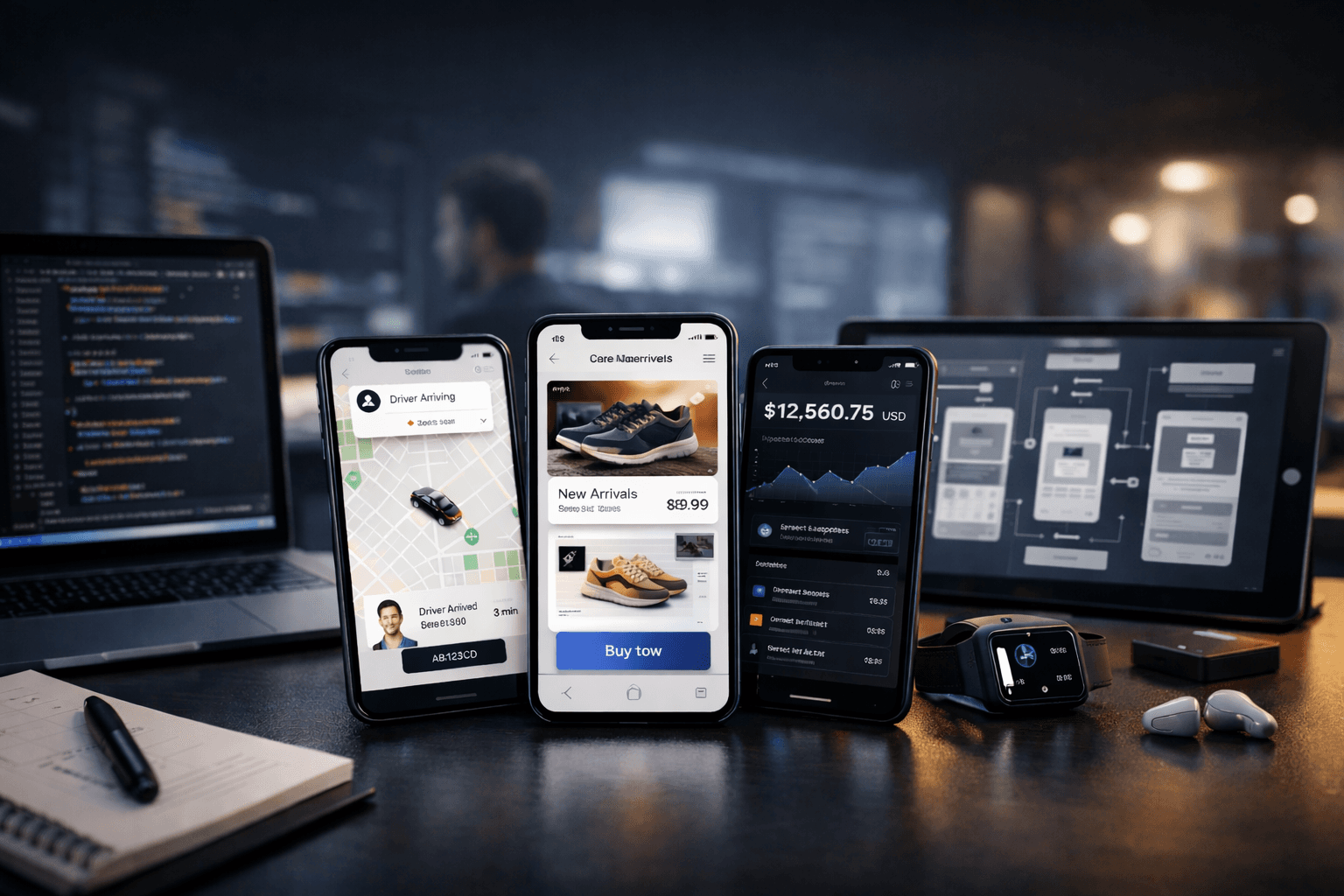
What is Mobile App Development
Mobile app development is the process of creating software products for smartphones and tablets that solve business challenges: process automation, customer engagement, sales growth, or service scaling.
Today, mobile app development is relevant for startups, small and medium businesses, as well as large companies in logistics, eCommerce, finance, education, healthcare, and service platforms.
Types of Mobile Apps
Native Apps
Developed separately for iOS and Android. Provide high performance, stability, and full access to device features.
Cross-Platform Apps
Created on a single codebase for multiple platforms. Suitable for quick launch and budget optimization.
Web and PWA Apps
Work in the browser and don't require installation. Used for services, internal systems, and catalogs.
App Development Stages
Analytics and Planning
Product idea formation, market analysis, target audience identification, and business goal definition.
Technical Design
Architecture description, workflow logic, user roles, integrations, and limitations.
UI/UX Design
Creating prototypes and design focused on usability and business metrics.
Development
Implementation of frontend and backend parts, database connections, APIs, and third-party services.
Testing
Checking stability, security, performance, and correct app functionality.
Launch and Support
Publication in App Store and Google Play, further updates, and scaling.
Modern App Features
Modern mobile apps typically include:
- user registration and authentication
- personal dashboards
- push notifications
- payment system integration
- analytics and action tracking
- integration with CRM, ERP, and third-party services
- administrative management panel
MVP as Optimal Starting Format
MVP (Minimum Viable Product) is a minimal version of an app with basic functionality that allows testing the idea on the market, gathering feedback, and reducing risks at the project start.
This approach enables gradual product expansion without unnecessary costs.
Mobile App Development Cost
App development cost depends on functionality complexity, number of platforms, design level, integrations, and scaling requirements.
Projects can start with MVP and gradually evolve into full products and ecosystems.
App Development at Qberry
Qberry specializes in developing mobile and web applications for businesses, startups, and digital platforms.
We work with the full product creation cycle — from idea and architecture to launch and further development. Each solution is designed considering business processes, scaling, and real client goals.
Conclusion
Mobile app development is a long-term investment in business growth. A properly built product enables process automation, improved customer interaction, and creates a competitive advantage in the market.
Ready to bring your project to life?
Let's talk about your project
$ qberry --how-we-work
→ scope_and_estimate/
# clear scope and estimate before we start
→ weekly_demo/
# you see working progress every week
→ one_pm_on_your_side/
# one contact who owns your project
$ launch && support ▶

no black box —you see every step