

Product discovery and strategy
Market and user research, technical feasibility and a prioritised roadmap, so the first money goes into the features that prove the business, not the ones that decorate it.
 ServiceView more
One team for the whole startup path: product strategy, design, the first release and the scaling that follows. AI inside the product where it makes it better, and in our delivery so your runway lasts longer.
Market and user research, technical feasibility and a prioritised roadmap, so the first money goes into the features that prove the business, not the ones that decorate it.
ServiceView moreA proof of concept for the risky part and a minimum viable product for the market, built to collect real feedback and show investors a working product.
ServiceView moreUser research, wireframes, prototypes and a visual language that make the product easy to adopt and give early users a reason to come back.
ServiceView moreStack choice, system design and engineering practices that let a small product grow without a rewrite, explained in terms a non-technical founder can decide on.
ServiceView moreAssistants, document and data processing, recommendations and agents built on Claude and OpenAI models, designed around your users and costed before they ship.
ServiceView moreIterations driven by analytics and feedback, new platforms, performance and scaling, with the team growing from single specialists to a dedicated team as you raise.
ServiceView moreAI in this service
A startup launched today often competes with products that already have AI inside. We find where it gives yours an edge and build it in from the first release, and use it in our own delivery either way.
We find where a model makes the product clearly better for users, prototype it on real data and build it in with the guardrails, logging and cost control it needs.
Onboarding, support triage, lead handling and reporting run as n8n workflows with AI steps, so the founding team spends its time on customers and investors.
Senior engineers work with AI assistants for code, tests and documentation, which stretches the runway; architecture and every release stay under human review.
Why Qberry
Short iterations, a clear backlog and code that is easy to change, because the first version of a startup is rarely the last one.
Start with a few specialists, add a full dedicated team after the round, and scale down again without long-term commitments.
Experience in fintech, healthcare, logistics, media, e-commerce, edtech and SaaS helps us ask the right questions before they become expensive.
A modern stack that is quick to build on and easy to hire for, with AI and automation where they give the product an edge.
 n8n
n8n Claude
 OpenAI
 Python
 TypeScript
 Next.js
 ReactReact Native
 Flutter
 Node.js
 Vue.js
 PostgreSQL
 Figma
Figma Docker
 AWS
AWSWith our technical process
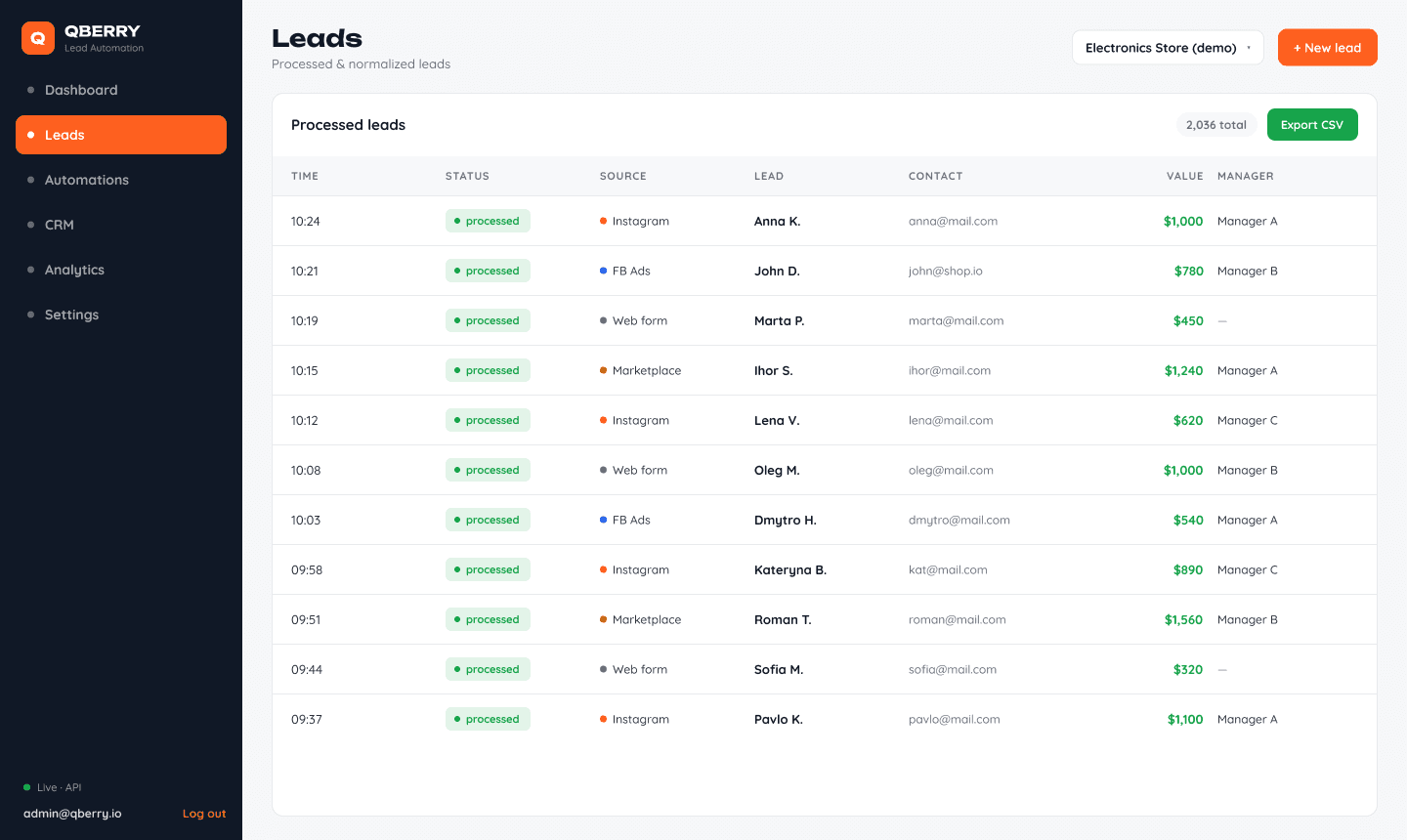
A unified system for processing leads from all channels — validation, CRM deal creation, distribution among managers, and instant client response.
View details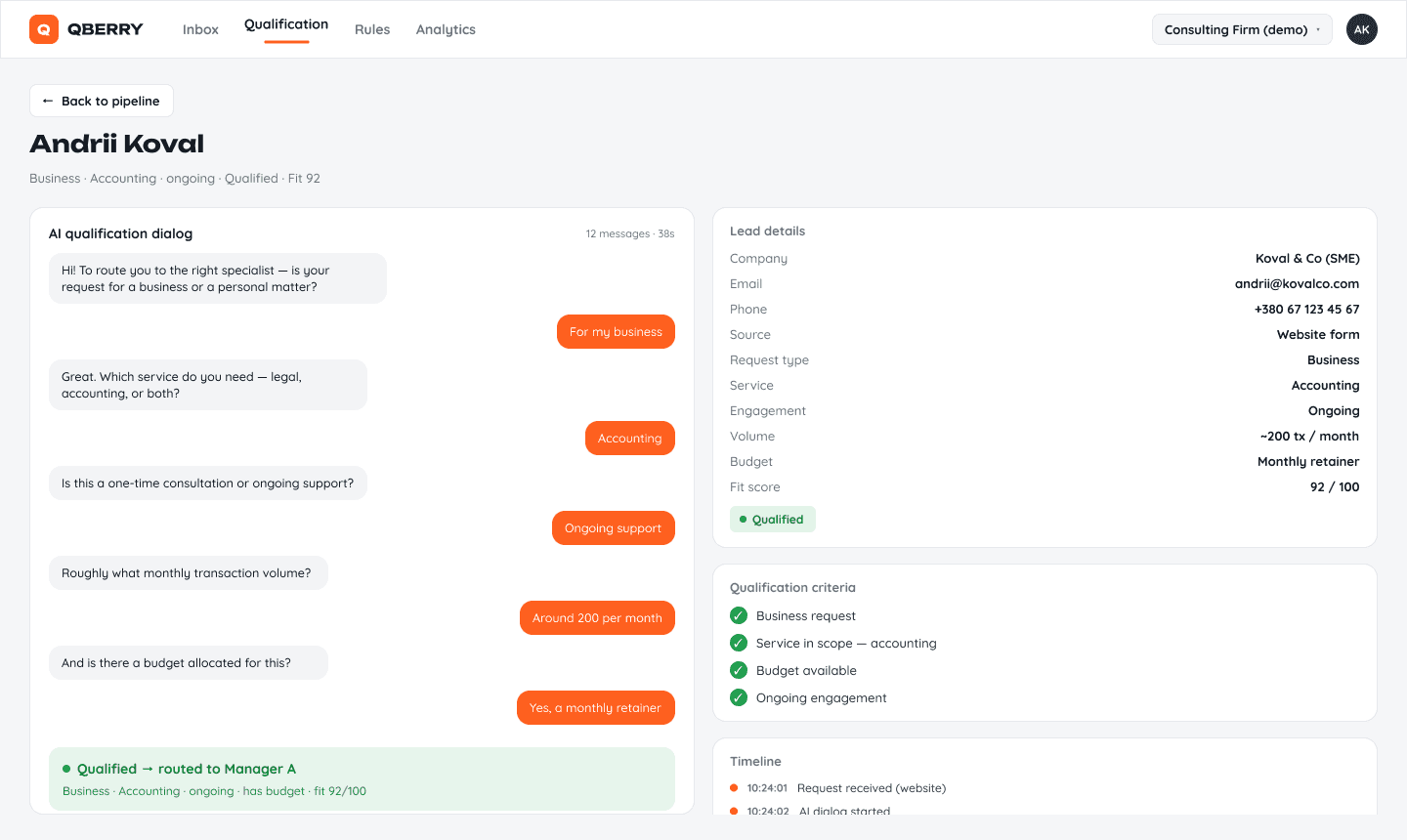
Automated initial client interaction powered by n8n and AI — filtering non-target inquiries and passing only qualified leads to managers.
View details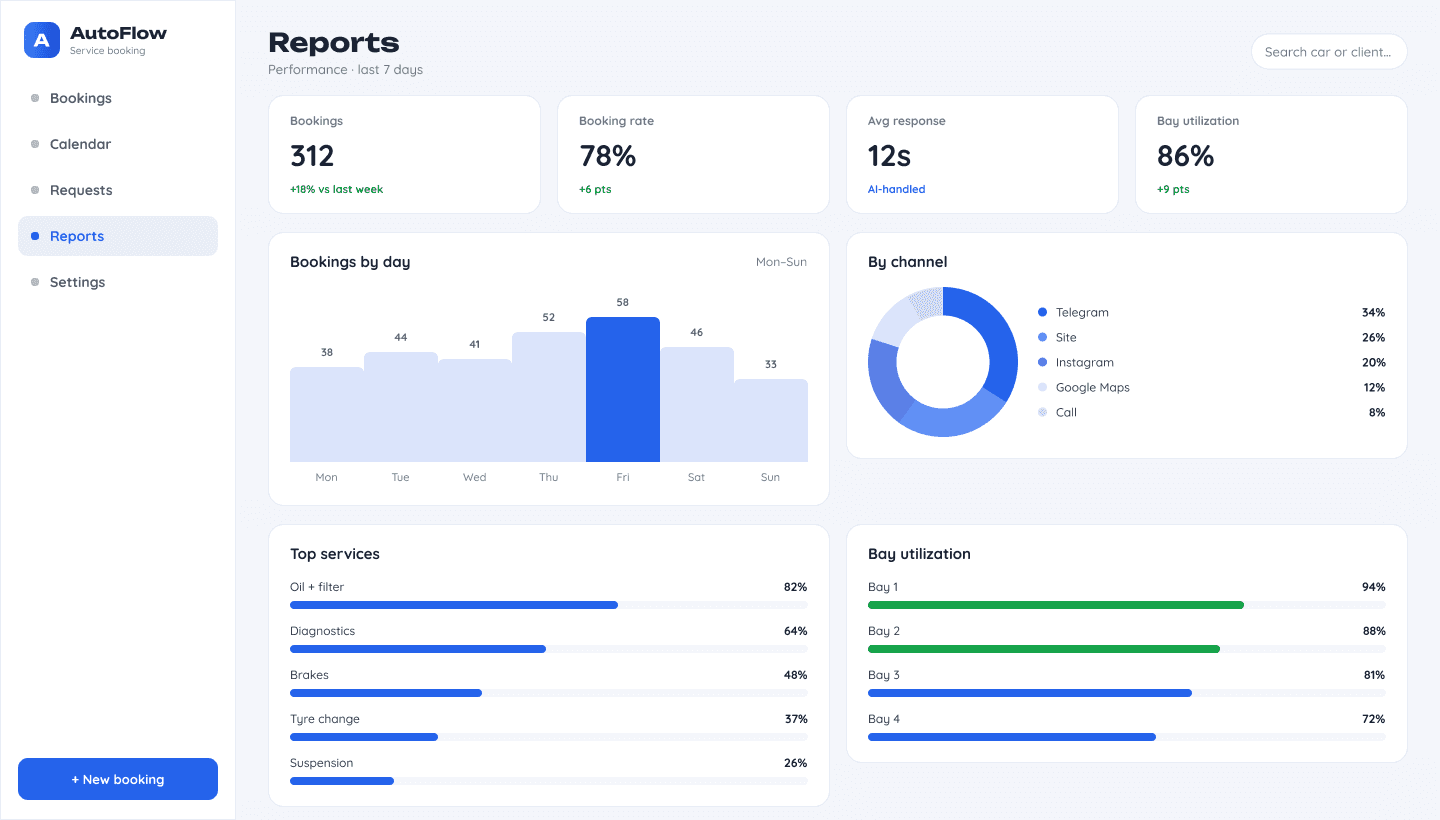
An AI assistant answers on every channel, collects the car, problem and urgency, checks the live schedule and turns each request into a ready-to-confirm booking.
View details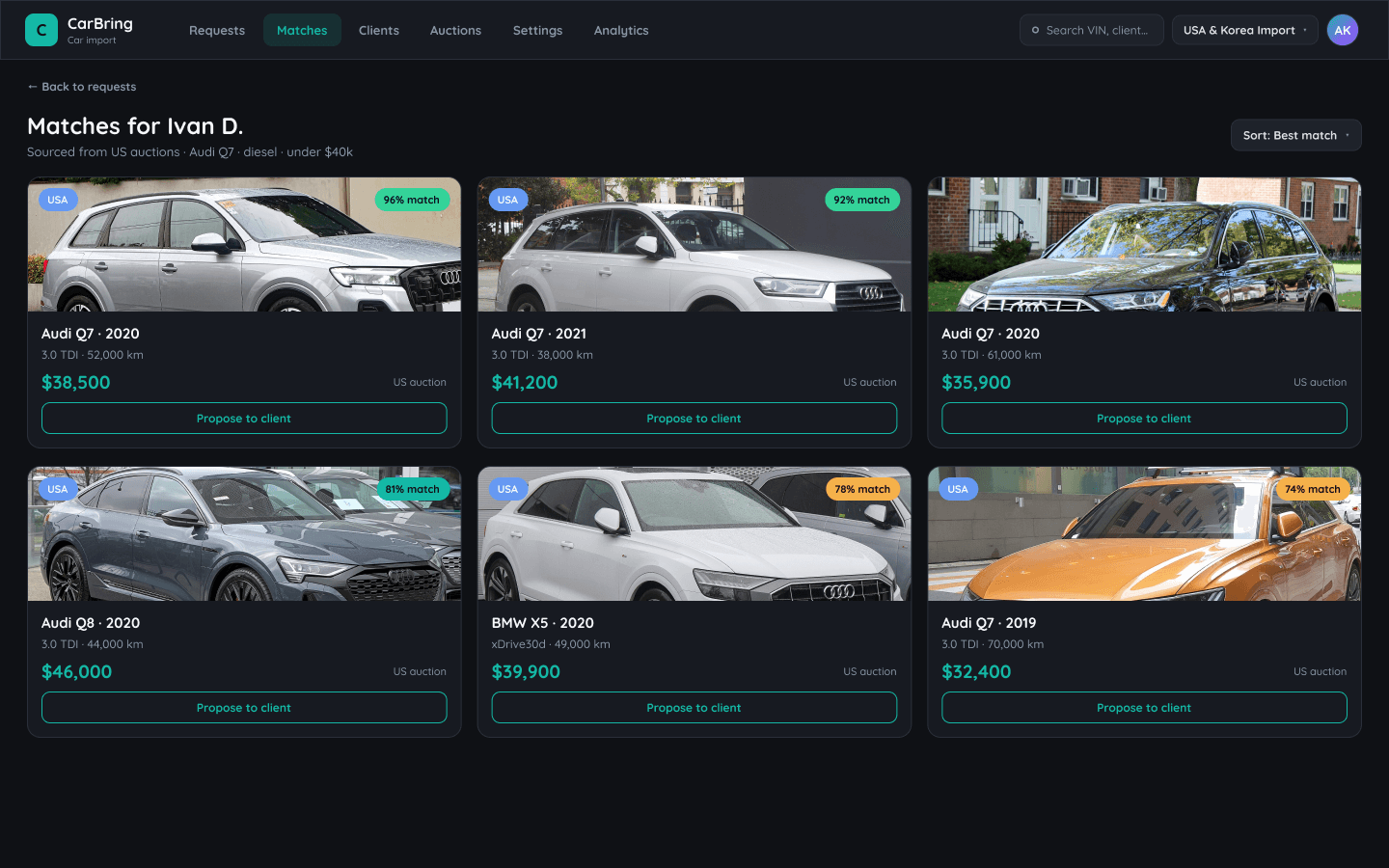
An AI assistant answers car enquiries on every channel, collects budget, make, year, engine and market, matches live US & Korean auction cars and hands the manager a qualified buyer.
View details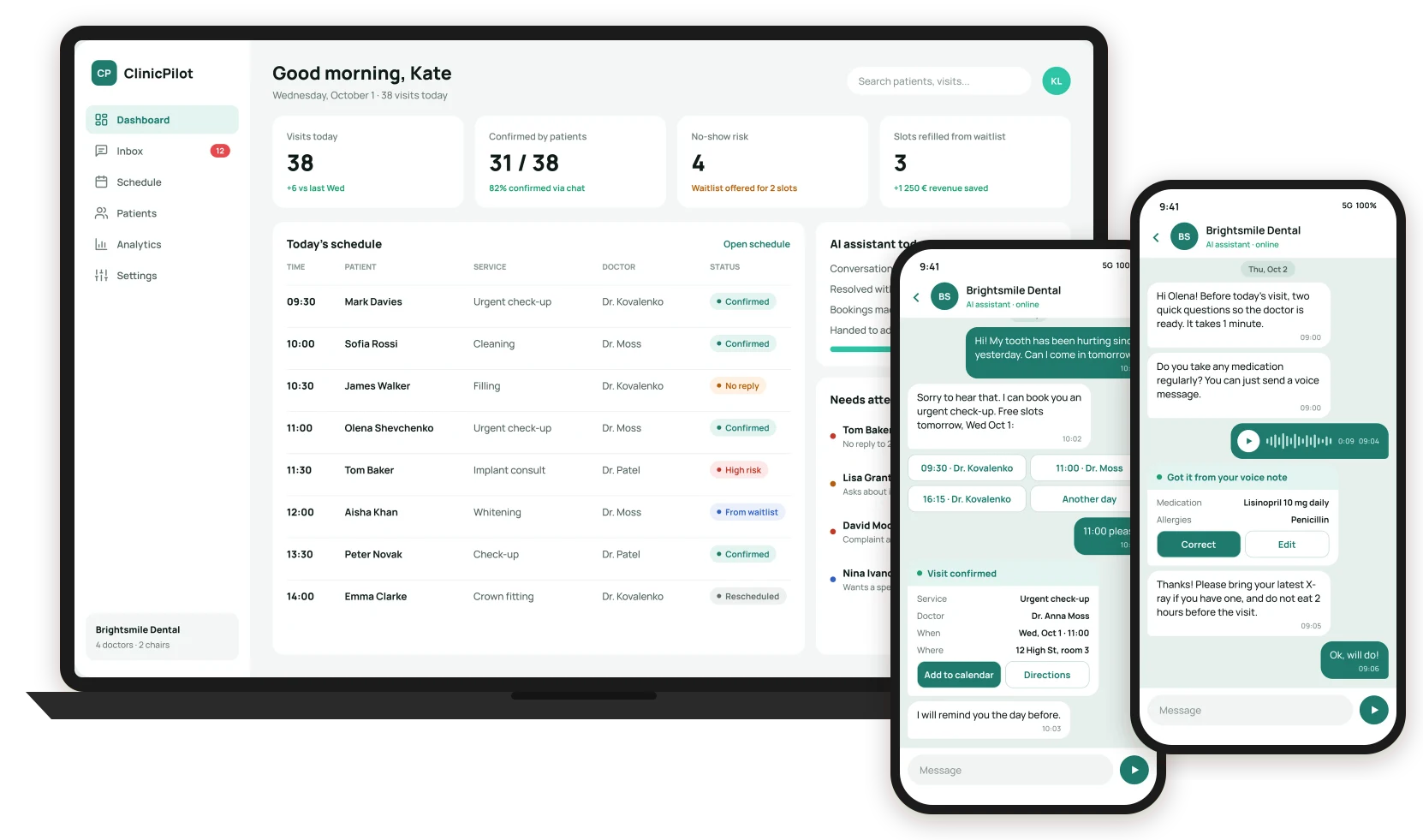
AI administrator for private clinics: booking, reminders, pre-visit questions and follow-ups in Telegram, WhatsApp and on the website, with one admin panel for the team.
View details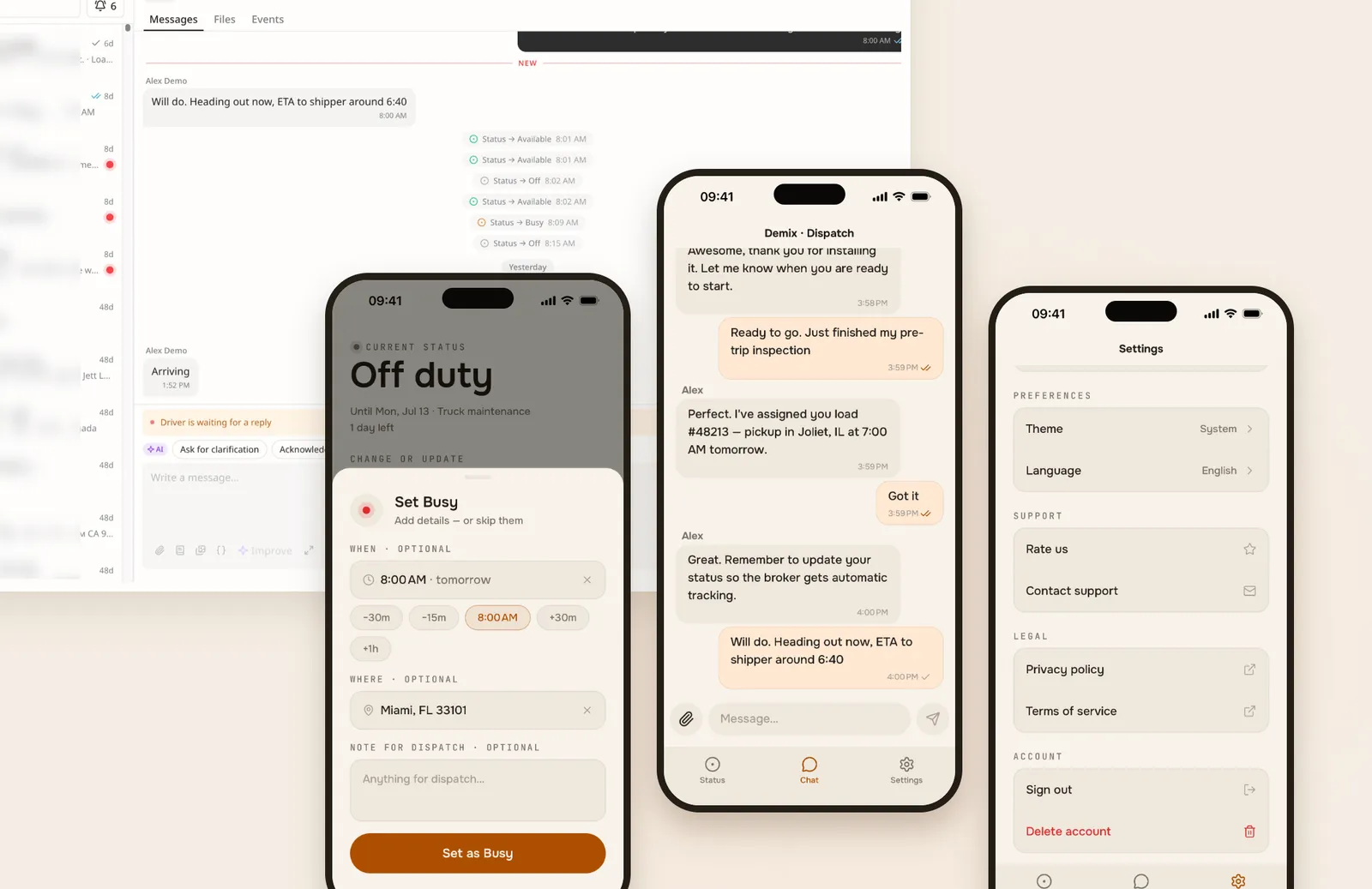
A dispatcher hub and driver mobile app that turn check calls into live data: driver statuses, automatic location sharing, rich chat with document scanning, and two-way TMS sync — multi-carrier by design.
View details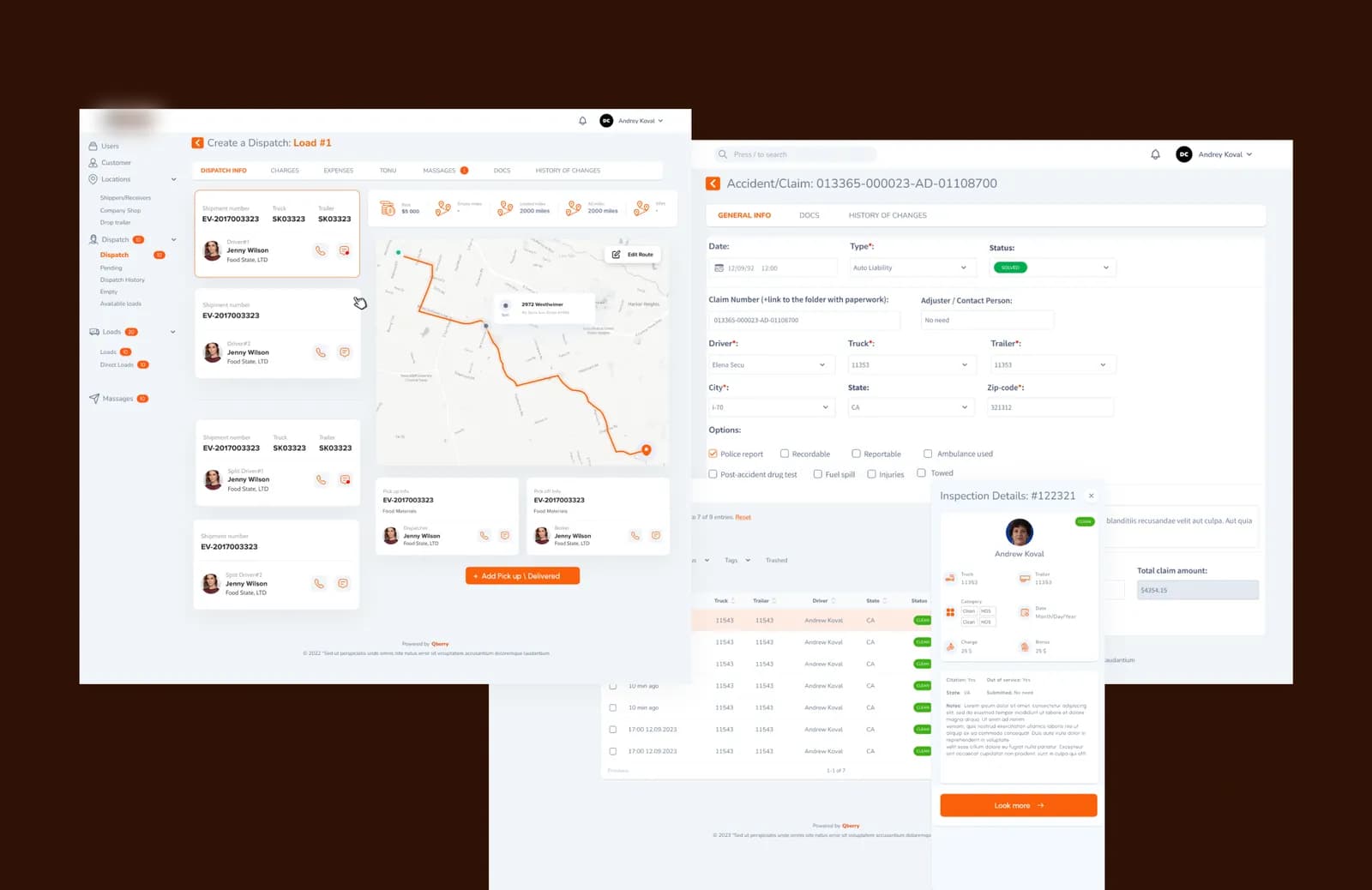
TMS for the logistics company with automated route planning and delivery points management modules. The solution's integration with the existing LMS
View details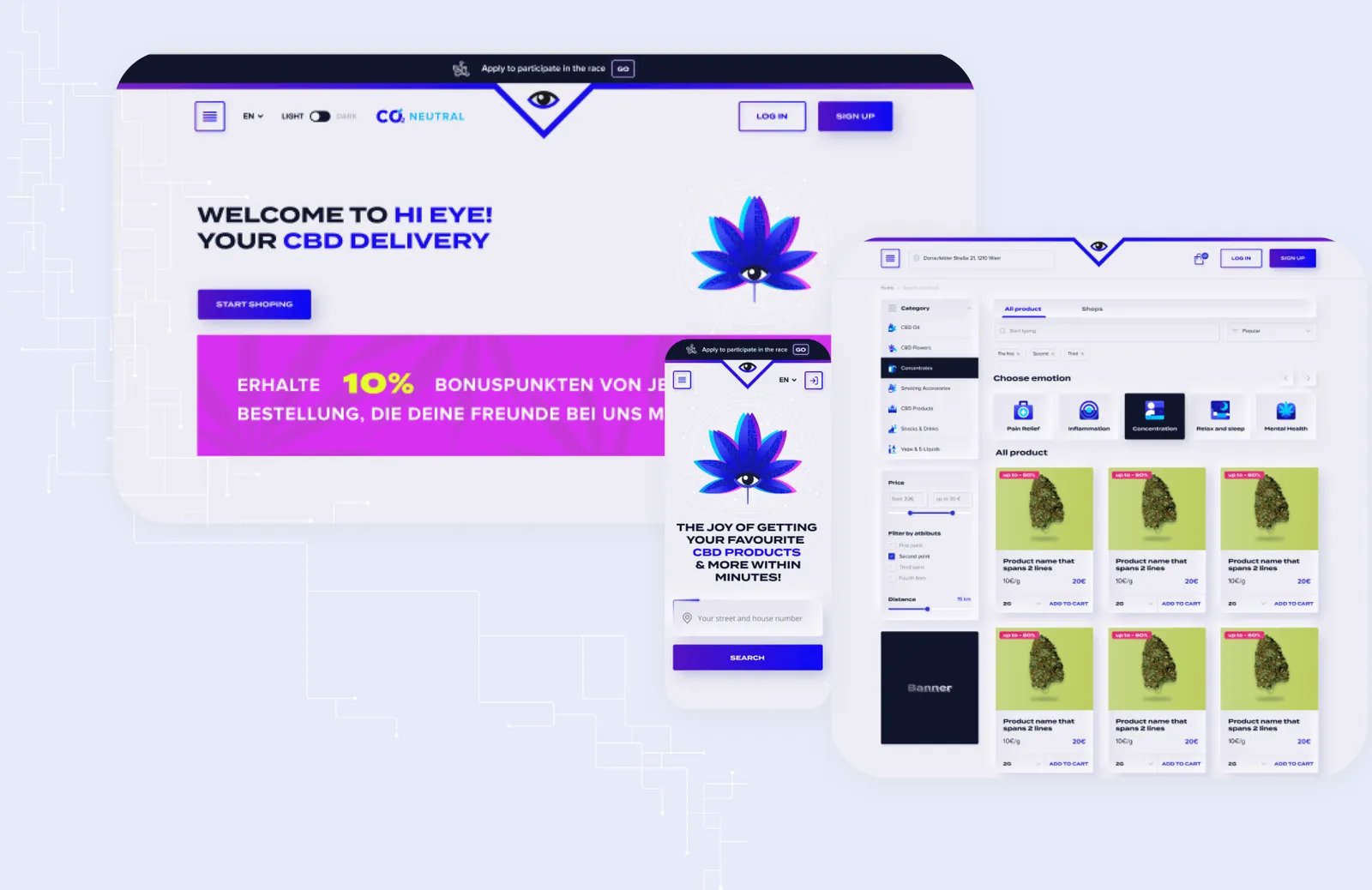
Project Hi Eye was initiated to make it easier for you to shop for CBD products in line with today's technology and trends.
View detailsLook at their portfolio and case studies in domains close to yours, read independent client reviews, check that they have taken products from idea to launch before, and see how they communicate and manage the work. A first consultation shows quickly whether they understand your vision and can guide technical decisions.
A clearly defined scope and transparent pricing, experience with cloud, mobile and AI, a realistic plan for the first release, knowledge of your industry, engagement models that fit your budget, and support after launch from the same team.
You get an experienced team immediately, without hiring overhead, and a faster route to market because the team has built first releases before. You can scale the team up or down as funding changes and keep your own people focused on customers and fundraising.
Usually two to four months, including discovery, design, development sprints and testing. A narrow MVP can be ready in six to eight weeks, and releases continue in short iterations after launch.
The stack follows the product, but TypeScript with React or Next.js on the front end, Node.js or Python on the back end, PostgreSQL and AWS cover most startups well. Flutter or React Native give you iOS and Android from one codebase, and Claude or OpenAI models with n8n add AI and automation where they create an advantage.
It depends on the scope, the number of platforms, the integrations and the support you need. A full product with web and mobile versions and advanced features usually costs between $50 000 and $150 000, while a first MVP costs less. A discovery phase gives you a detailed estimate before development starts.
Let's talk about your project

Illia Kvasnitkiy
CEO at Qberry
"Qberry impresses with technical prowess, timely delivery, and excellent communication. Their dedication to quality enhanced our partnership."