

System assessment
Code quality, architecture, security and dependencies reviewed before any change, with the risks and the parts that hold the business back named in a written report.
 ServiceView more
We move legacy software to a modern stack in stages, replacing the old parts while the business keeps working on them. AI reads and documents the old code, so the plan rests on what the system really does.
Code quality, architecture, security and dependencies reviewed before any change, with the risks and the parts that hold the business back named in a written report.
ServiceView moreTarget stack, migration order, timeline and rollback plan agreed up front, so every stage delivers value on its own and can be stopped safely.
ServiceView moreOutdated languages and frameworks upgraded or replaced, monoliths split where it pays off, and APIs added so the system connects to modern tools.
ServiceView moreThe system moved to cloud infrastructure in containers, with CI/CD pipelines, auto-scaling and backups, and the data transferred with integrity checks.
ServiceView moreTechnical debt paid down, slow queries and indexes optimised, caching added, so the code becomes cheaper to change and faster to run.
ServiceView moreOld screens replaced with responsive, accessible interfaces built around today's workflows, then training and documentation so the team switches without friction.
ServiceView moreAI in this service
The hardest part of modernisation is understanding a system nobody fully remembers. AI makes that part faster, and senior engineers make the decisions.
AI maps modules, dependencies and business rules across the old code base and drafts the missing documentation, which engineers verify before the plan is fixed.
Tests that capture the current behaviour are generated before a module is replaced, and AI-assisted translation to the new stack is reviewed line by line.
n8n workflows work beside the legacy system through its API or data exports, so the routine around it is automated while the core is replaced; AI features inside the product arrive with the new modules.
Why Qberry
The old and new parts run side by side in stages, with staging environments and rollback plans, so operations never depend on one risky release day.
A modern stack, clean code and tests mean new features stop taking months and maintenance stops eating the budget.
Monitoring, optimisation and further development continue after the migration, with the same team that knows both the old and the new system.
The modern stack we migrate to, the legacy stacks we can read, and AI to get from one to the other faster.
 n8n
n8n Claude
 OpenAI
 TypeScript
 Next.js
 Python
 React
React Vue.js
 Node.js
 Laravel
 PHP
PHP PostgreSQL
 Symfony
 .NET / C#
 Docker
 AWS
AWSWith our technical process
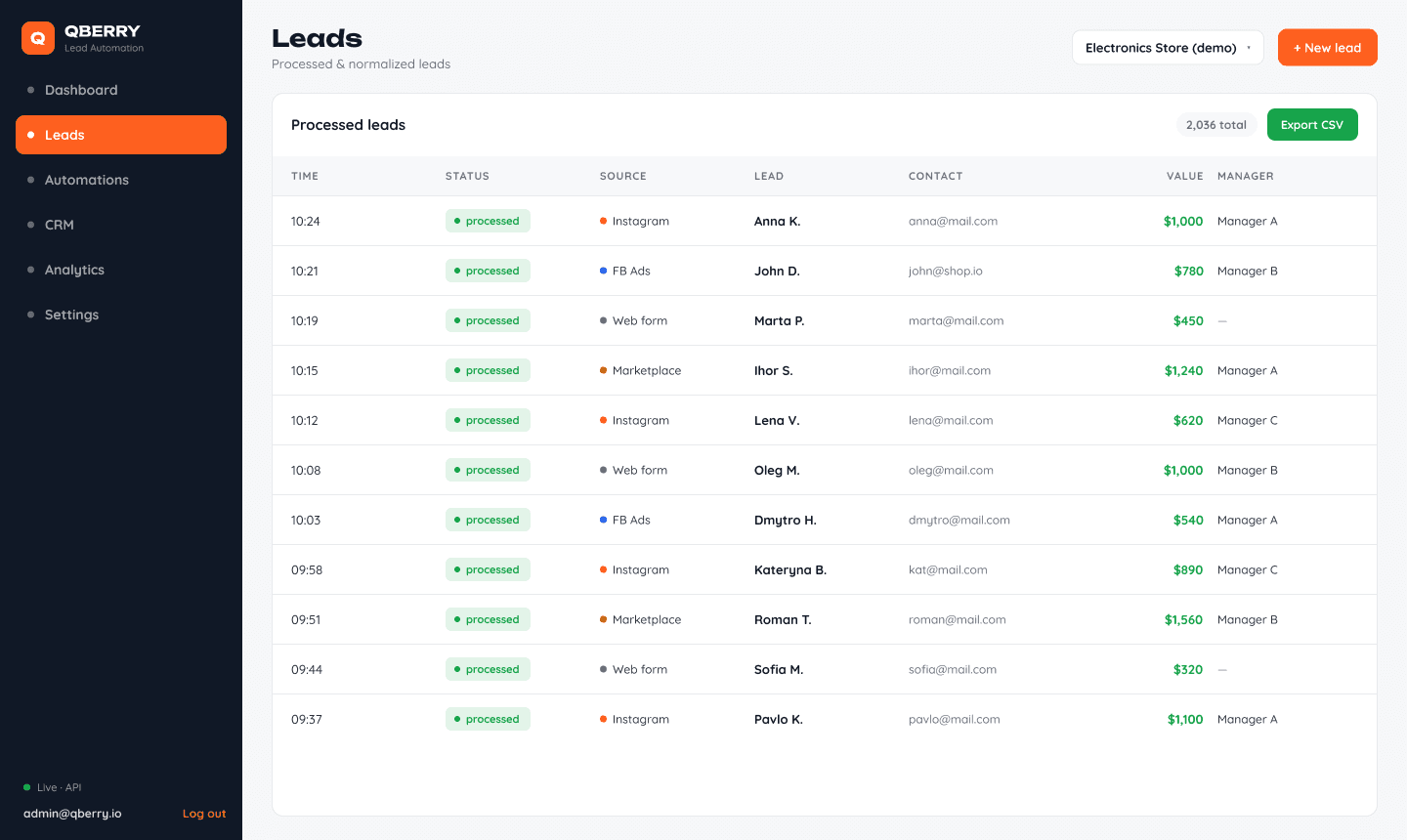
A unified system for processing leads from all channels — validation, CRM deal creation, distribution among managers, and instant client response.
View details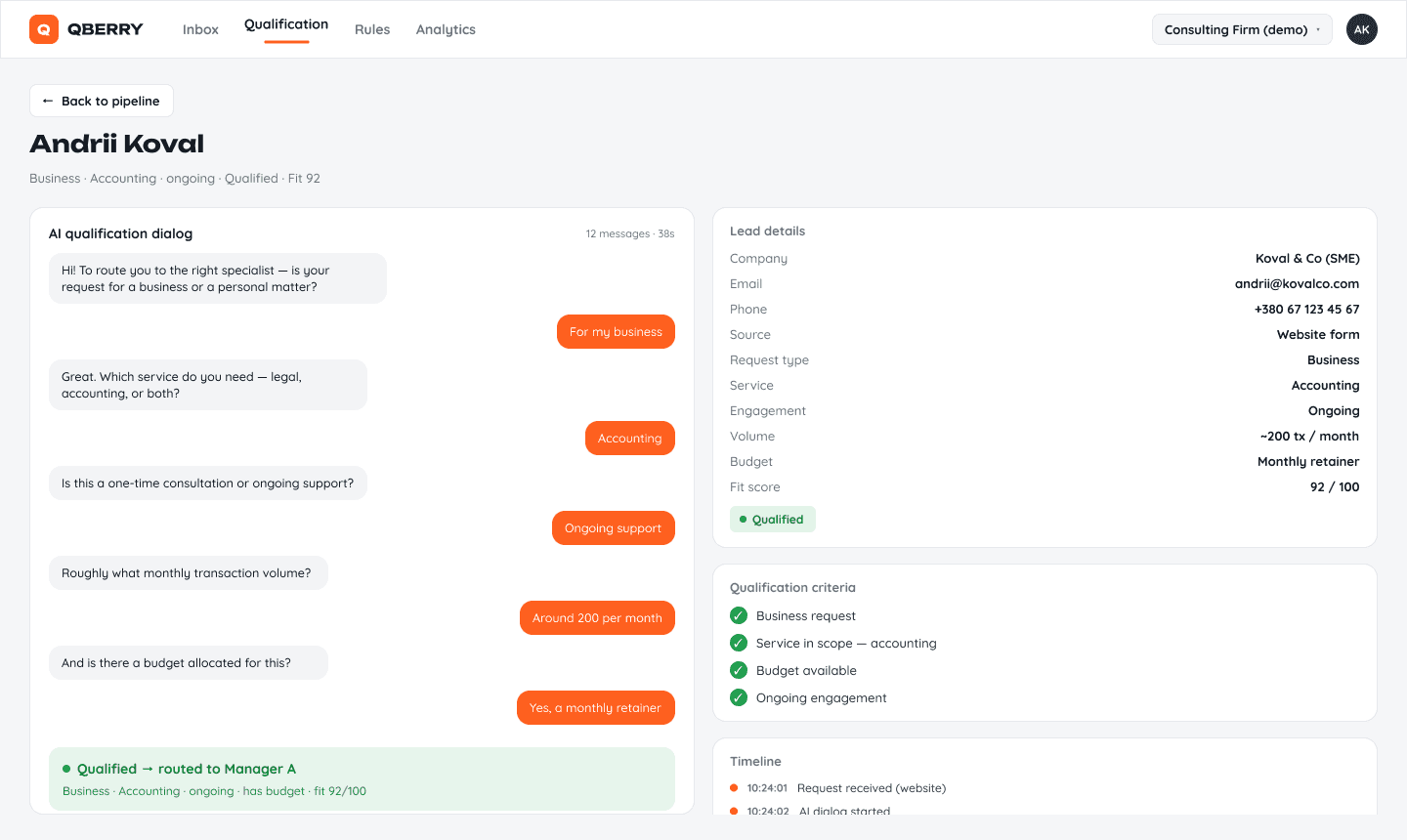
Automated initial client interaction powered by n8n and AI — filtering non-target inquiries and passing only qualified leads to managers.
View details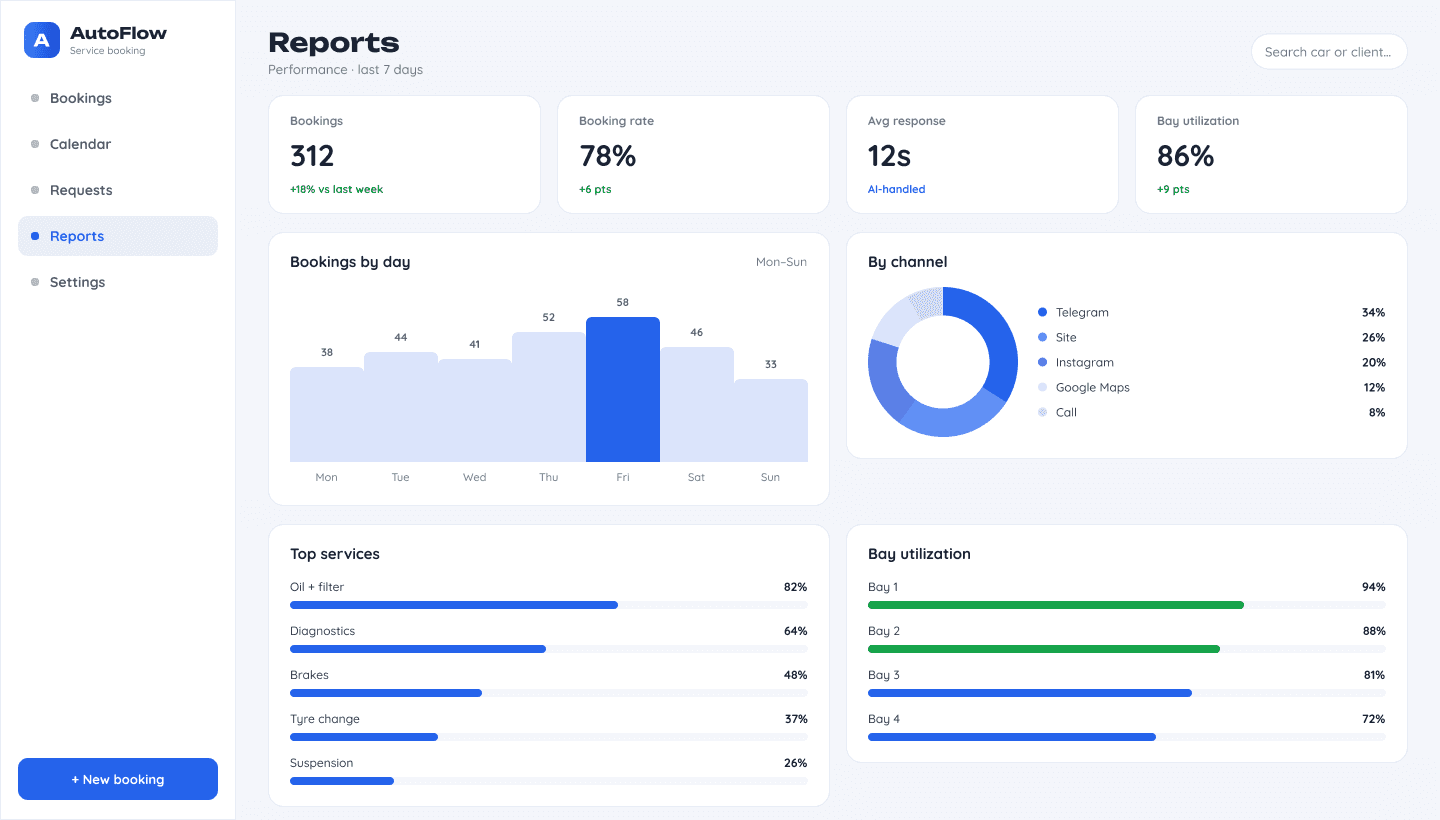
An AI assistant answers on every channel, collects the car, problem and urgency, checks the live schedule and turns each request into a ready-to-confirm booking.
View details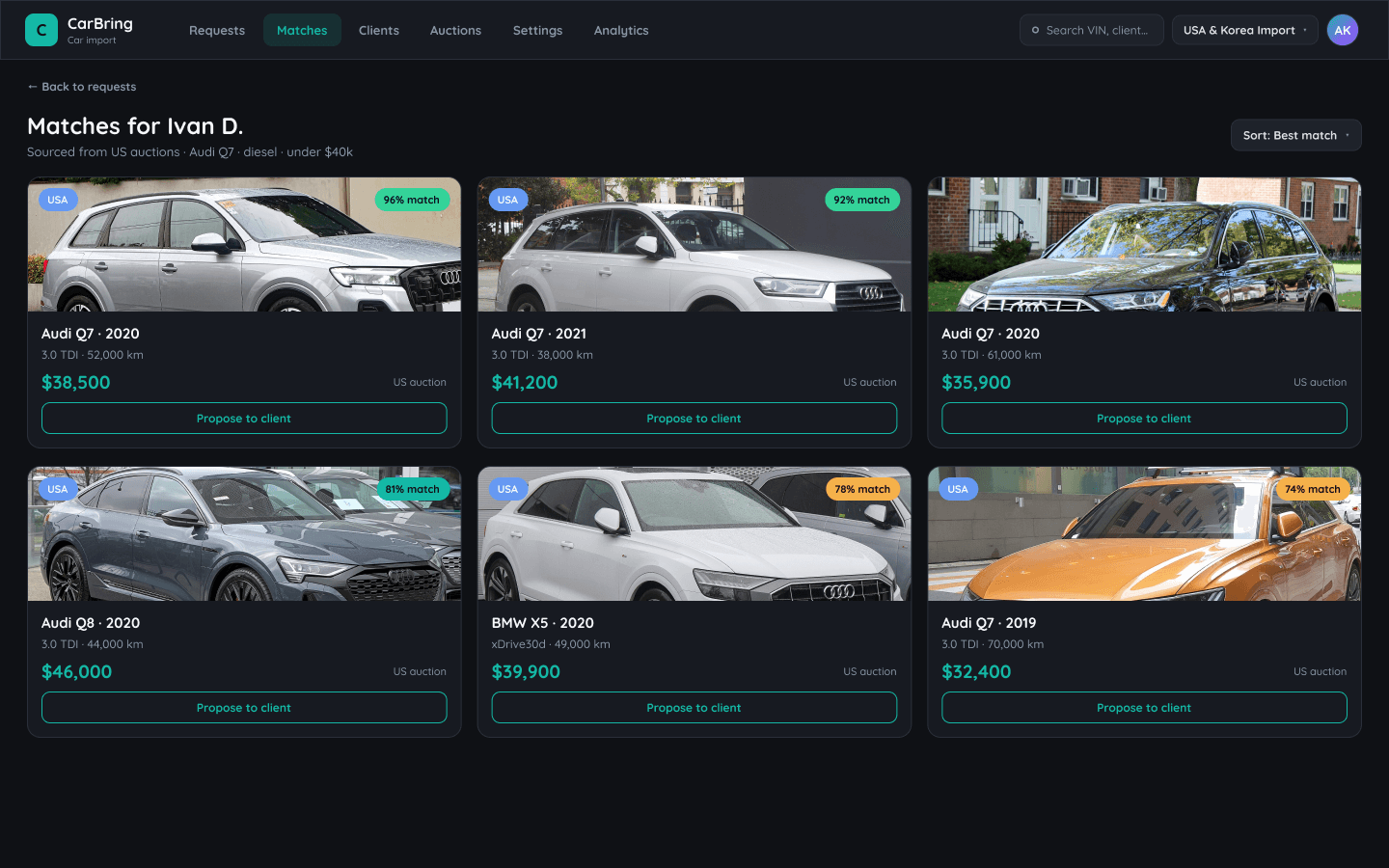
An AI assistant answers car enquiries on every channel, collects budget, make, year, engine and market, matches live US & Korean auction cars and hands the manager a qualified buyer.
View details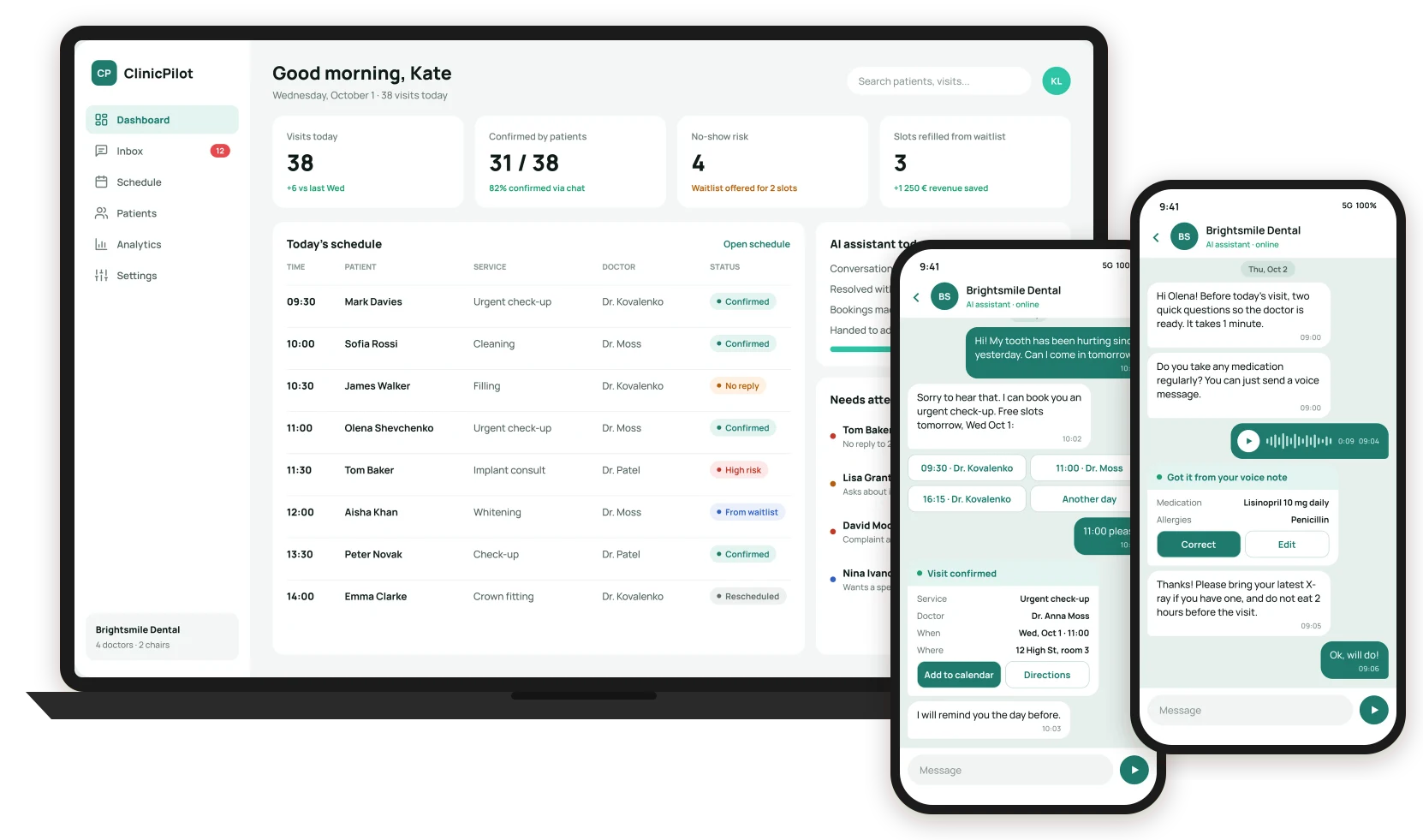
AI administrator for private clinics: booking, reminders, pre-visit questions and follow-ups in Telegram, WhatsApp and on the website, with one admin panel for the team.
View details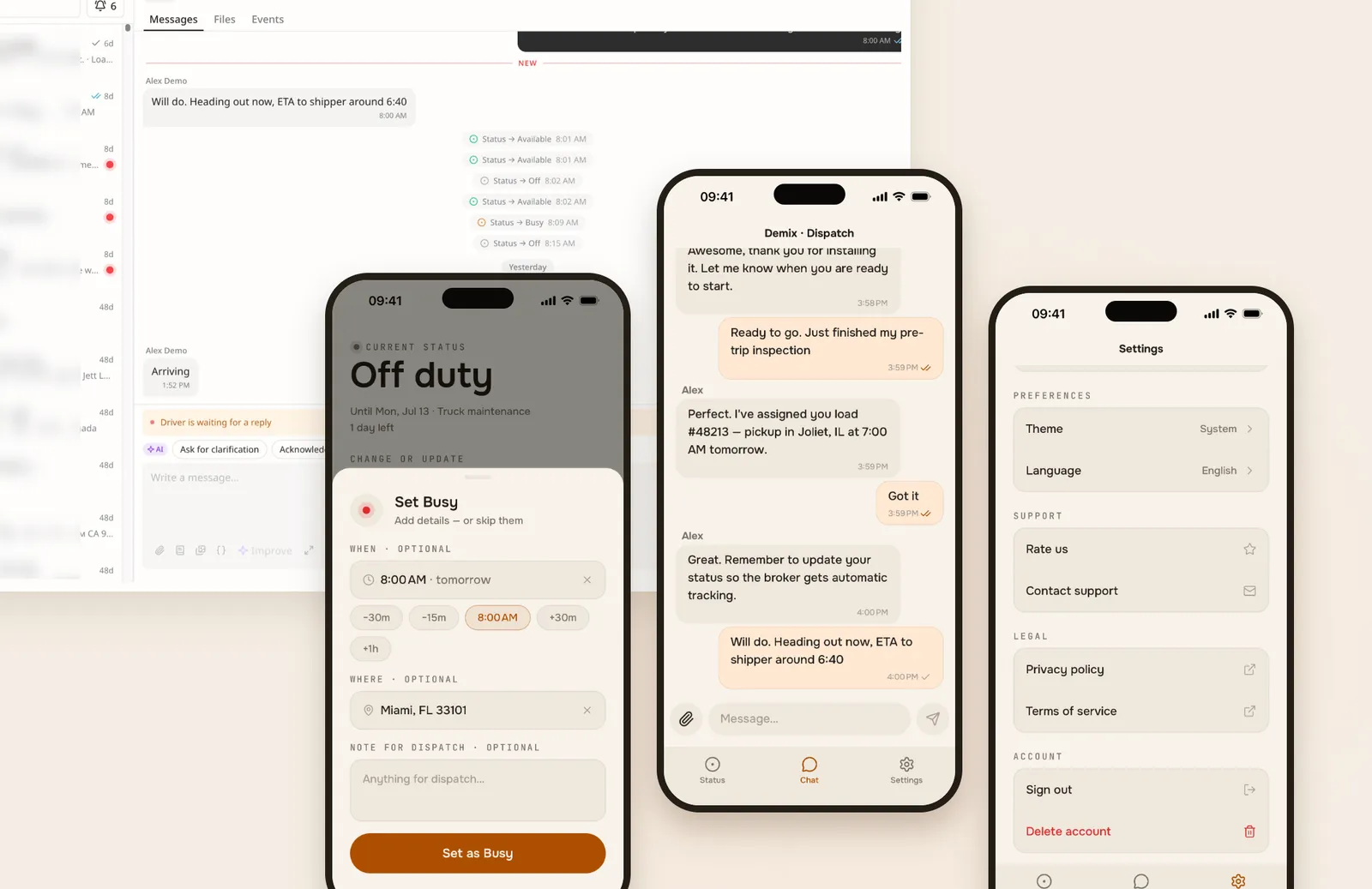
A dispatcher hub and driver mobile app that turn check calls into live data: driver statuses, automatic location sharing, rich chat with document scanning, and two-way TMS sync — multi-carrier by design.
View details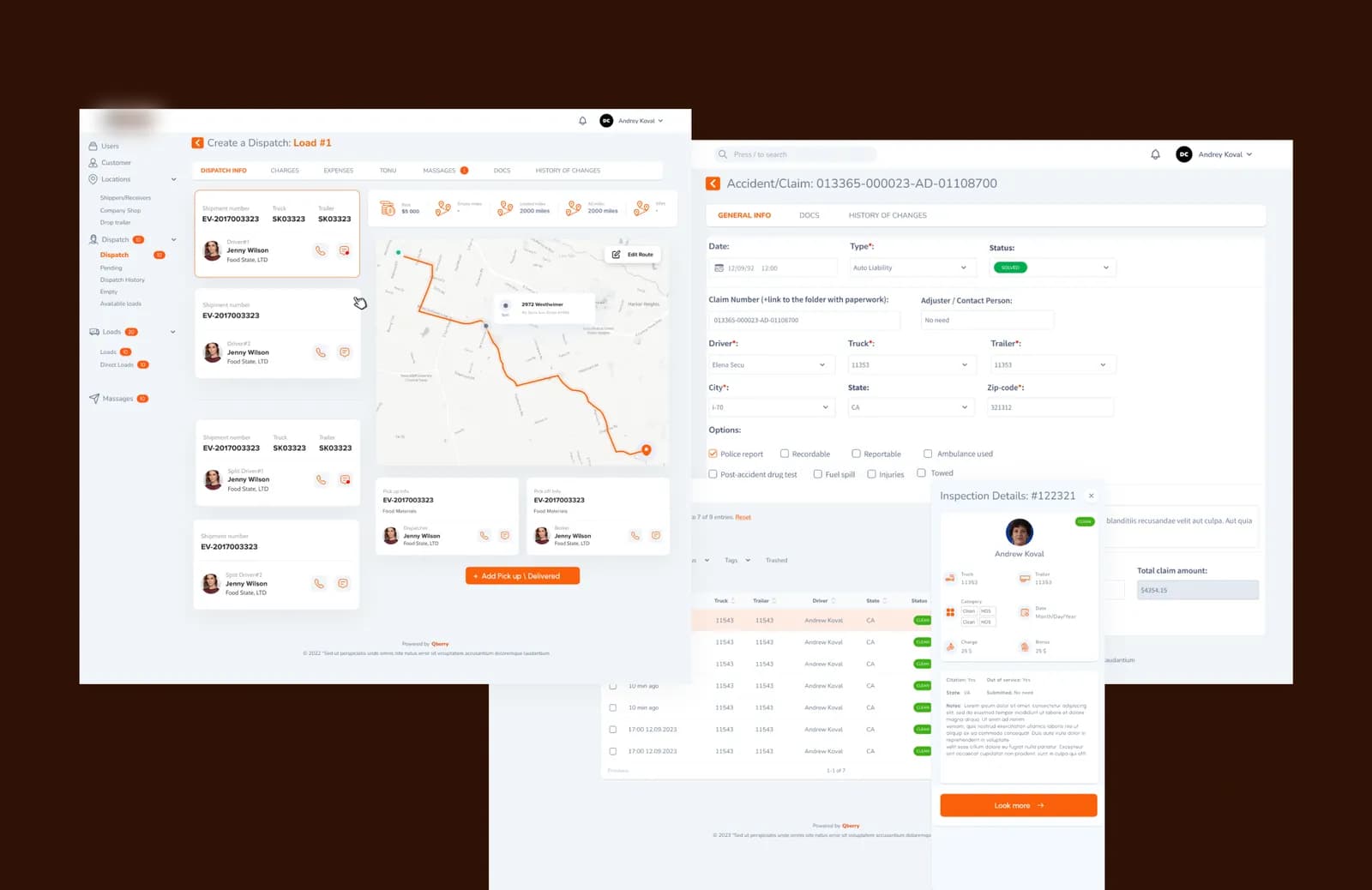
TMS for the logistics company with automated route planning and delivery points management modules. The solution's integration with the existing LMS
View details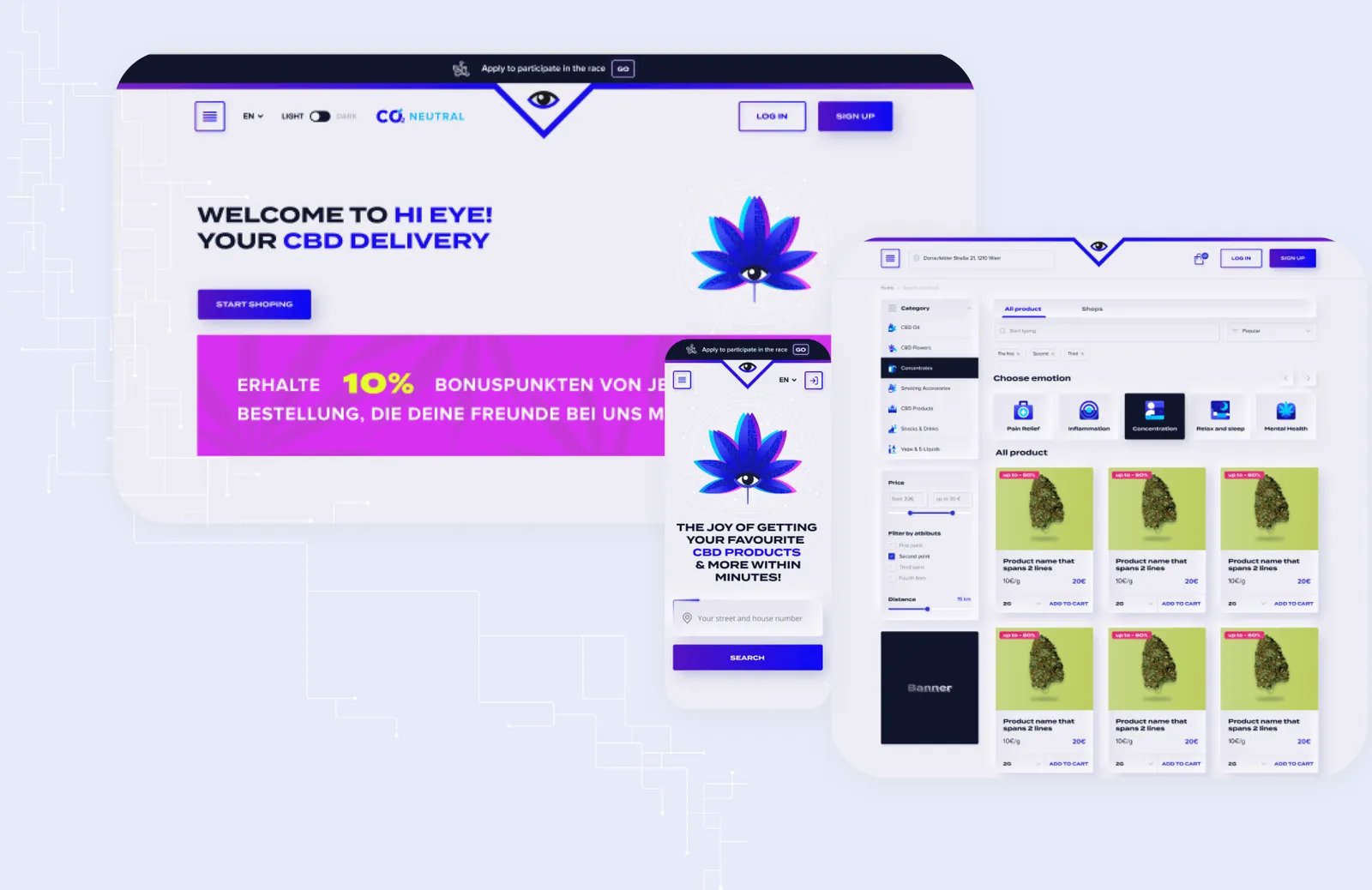
Project Hi Eye was initiated to make it easier for you to shop for CBD products in line with today's technology and trends.
View detailsUpdating an outdated system with current technologies, frameworks and architecture so it meets today's business and technical requirements. It can mean rewriting code, moving to the cloud, redesigning interfaces or rebuilding the application while keeping the functionality the business depends on.
It depends on the system and the scope. An interface update usually takes two to three months, a full reengineering project six to twelve. The timeline is fixed after the initial assessment and the roadmap.
The work is planned to avoid it. Changes go live in stages, the old and new parts run in parallel during transitions, and critical processes stay available throughout.
It varies with the system and the approach. An interface refresh usually starts from $15 000 to $30 000, a complete reengineering ranges from $50 000 to $200 000 and more. You get a detailed estimate together with the roadmap.
Yes. Data migration is part of every modernisation: a migration plan, secure transfer, validation and integrity checks, from a simple database upgrade to complex transformations between platforms.
Every stage has backups, a staging environment for testing and a rollback procedure. If a release causes a problem, we return to the previous stable version and fix the issue before trying again.
Your stakeholders take part from requirements gathering through design reviews to user acceptance testing, and regular demos let you correct the course before the final rollout.
Let's talk about your project

Illia Kvasnitkiy
CEO at Qberry
"Qberry impresses with technical prowess, timely delivery, and excellent communication. Their dedication to quality enhanced our partnership."