

Proof of concept
A focused build that answers one risky question, such as whether a model handles your data, an integration holds up or an algorithm is fast enough, before the product is planned around it.
 ServiceView more
A proof of concept to check that the idea works, a minimum viable product to check that people want it. Lean scope, real users, analytics from day one, and AI where it makes the first version stand out.
A focused build that answers one risky question, such as whether a model handles your data, an integration holds up or an algorithm is fast enough, before the product is planned around it.
ServiceView moreA short workshop that turns the idea into user journeys and the smallest set of features that tests your key assumption, with success metrics agreed up front.
ServiceView moreWireframes, several design directions and a clickable prototype you can put in front of users and investors before a line of production code is written.
ServiceView moreShort sprints with regular demos, continuous functional and usability testing, and web, iOS and Android from one cross-platform codebase when mobile matters.
ServiceView moreEvent tracking, funnels and feature usage set up before launch, so every decision after it is based on how people actually use the product.
ServiceView moreCloud setup, deployment and app store submission, then updates driven by your KPIs, A/B tests and user feedback, on an architecture ready for growth.
ServiceView moreAI in this service
The point of an MVP is to learn quickly and cheaply. AI shortens the path to the answer and often becomes the feature worth testing.
If the product depends on AI, the PoC runs Claude or OpenAI models on your real data and shows what quality, speed and cost to expect before the MVP is committed.
Admin tasks, notifications, payments follow-up and reporting run as n8n workflows instead of custom screens, so the budget goes into what users see.
AI-assisted engineering speeds up prototypes, boilerplate and tests, so each iteration reaches users sooner; senior engineers review every change.
Why Qberry
A lean scope that tests the business idea first, so you do not spend the budget on features nobody has asked for yet.
From the first workshop to post-launch updates, the same people carry the product, so nothing is lost between stages.
The MVP is built on a production stack with a clear architecture, so when it gains traction you extend it instead of starting over.
A production-ready stack that ships quickly, with AI models and automation to test the ideas that depend on them.
 n8n
n8n Claude
 OpenAI
 Python
 TypeScript
 Next.js
 ReactReact Native
 Flutter
 Node.js
 PostgreSQL
 Figma
Figma AWS
AWSWith our technical process
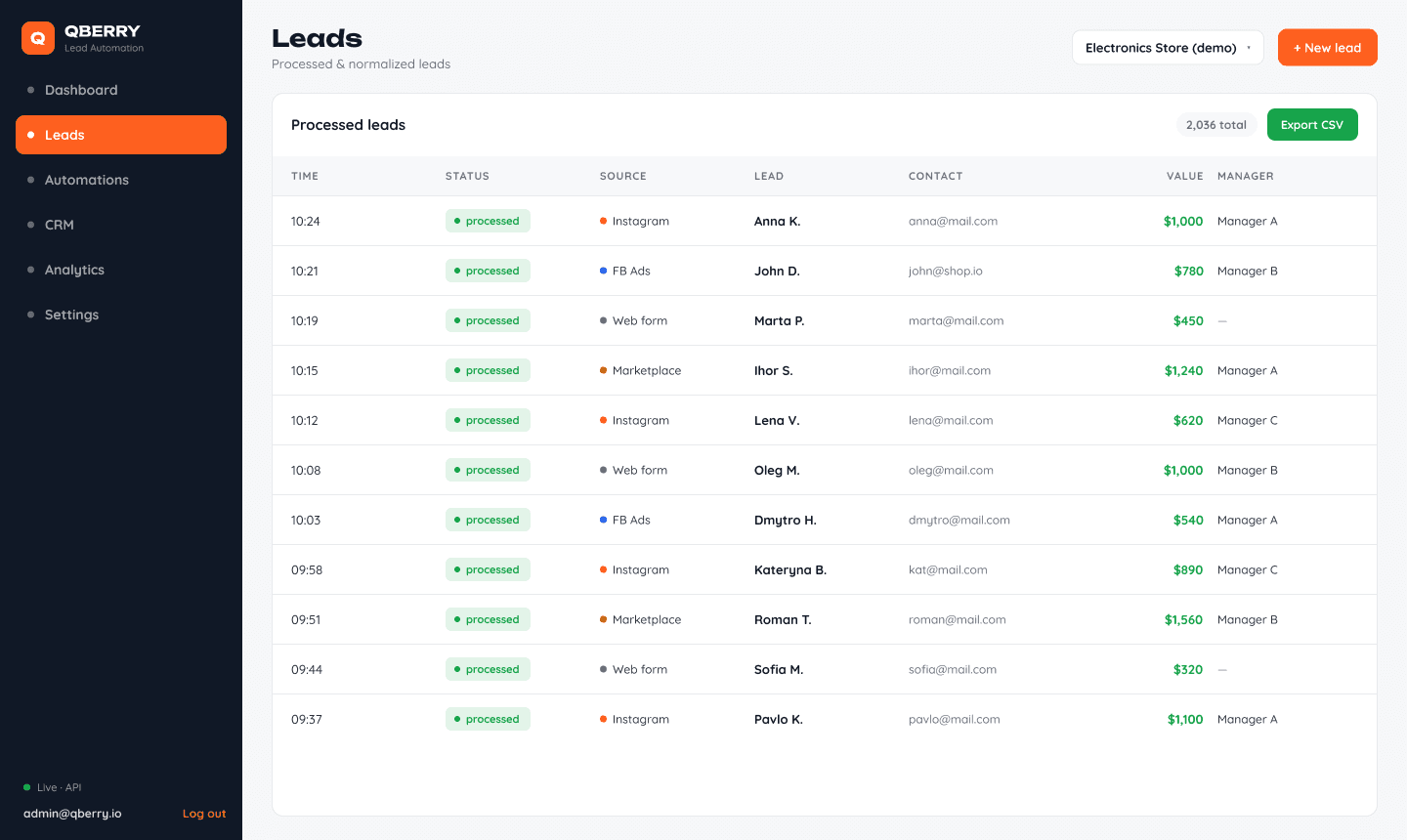
A unified system for processing leads from all channels — validation, CRM deal creation, distribution among managers, and instant client response.
View details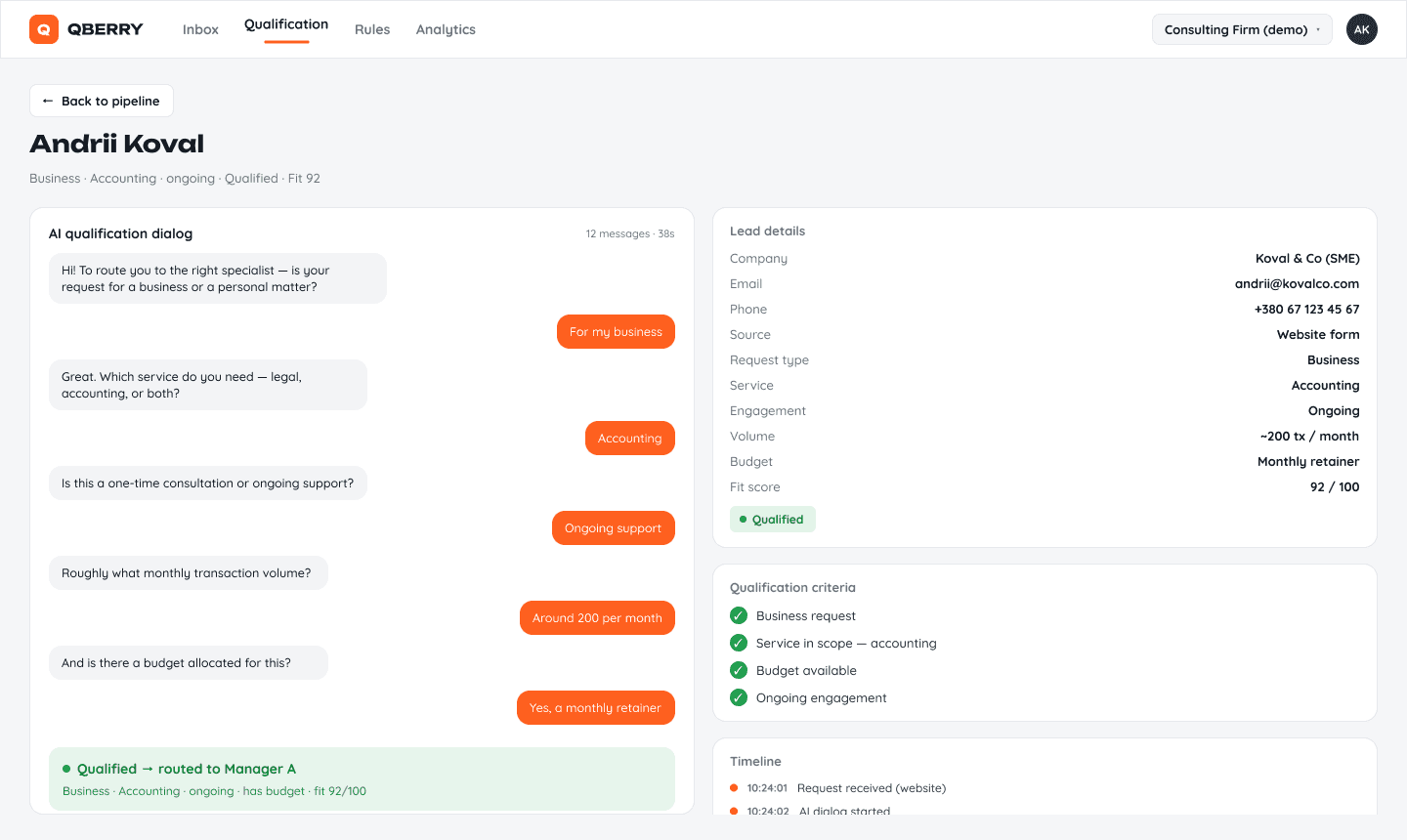
Automated initial client interaction powered by n8n and AI — filtering non-target inquiries and passing only qualified leads to managers.
View details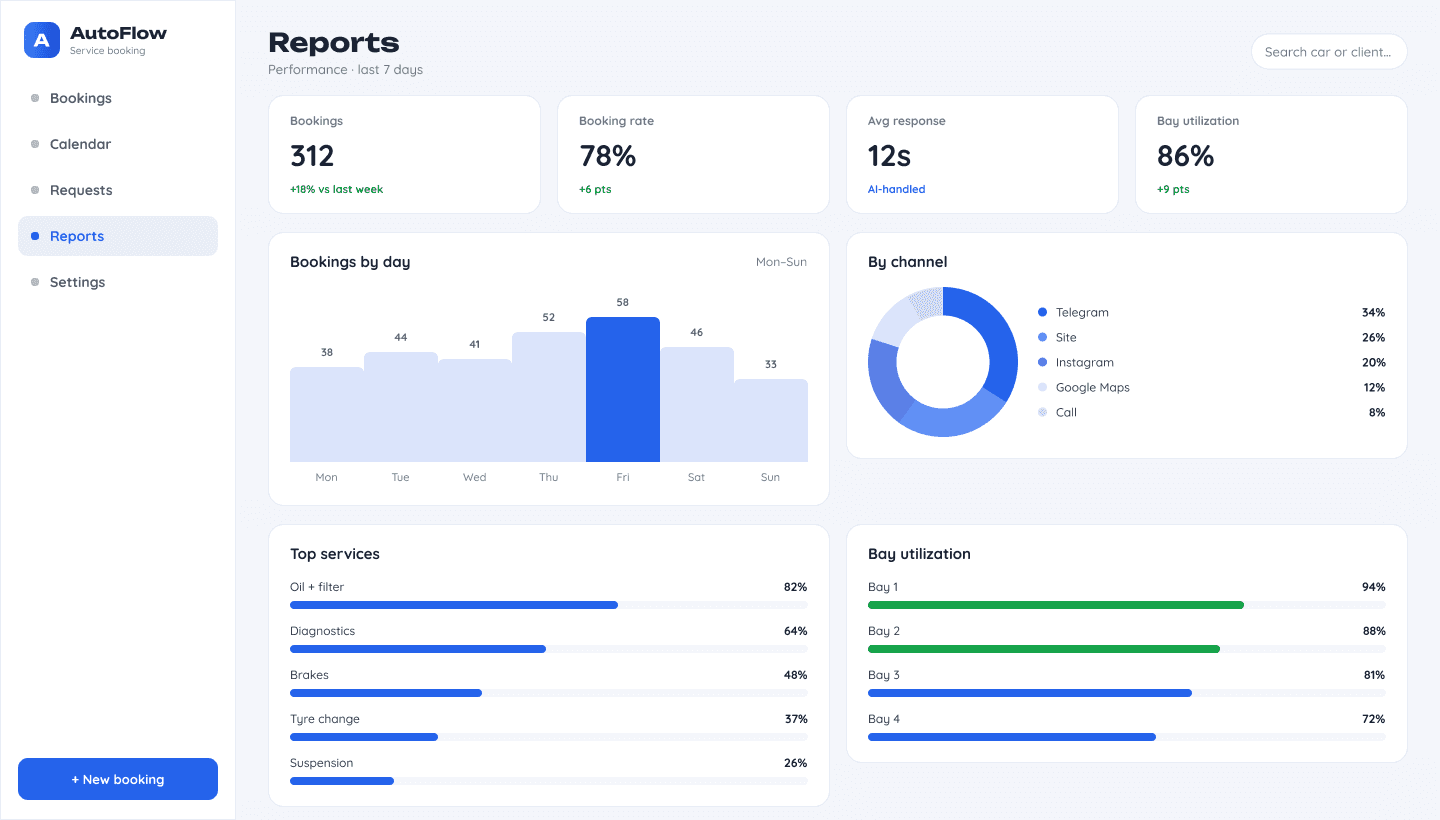
An AI assistant answers on every channel, collects the car, problem and urgency, checks the live schedule and turns each request into a ready-to-confirm booking.
View details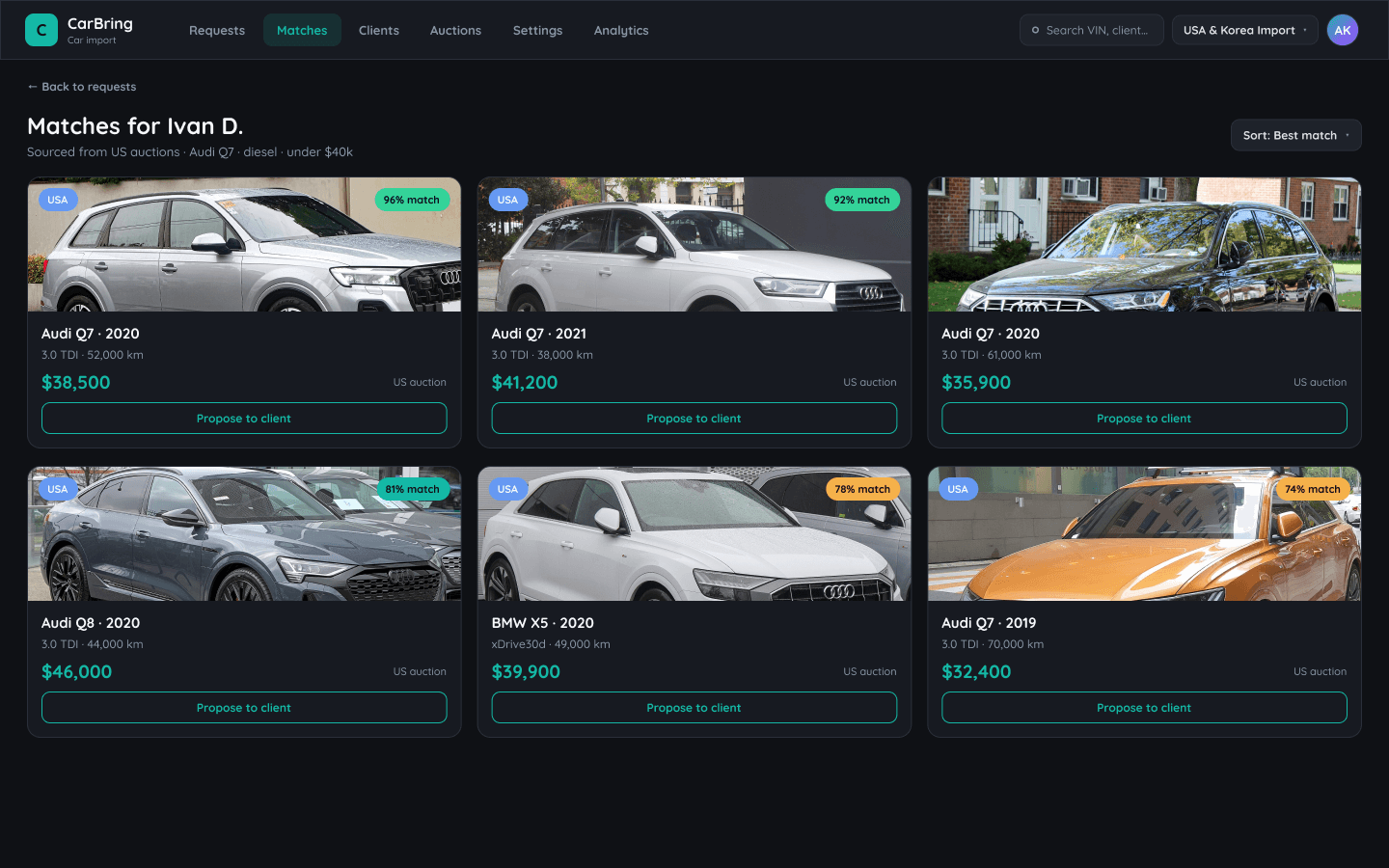
An AI assistant answers car enquiries on every channel, collects budget, make, year, engine and market, matches live US & Korean auction cars and hands the manager a qualified buyer.
View details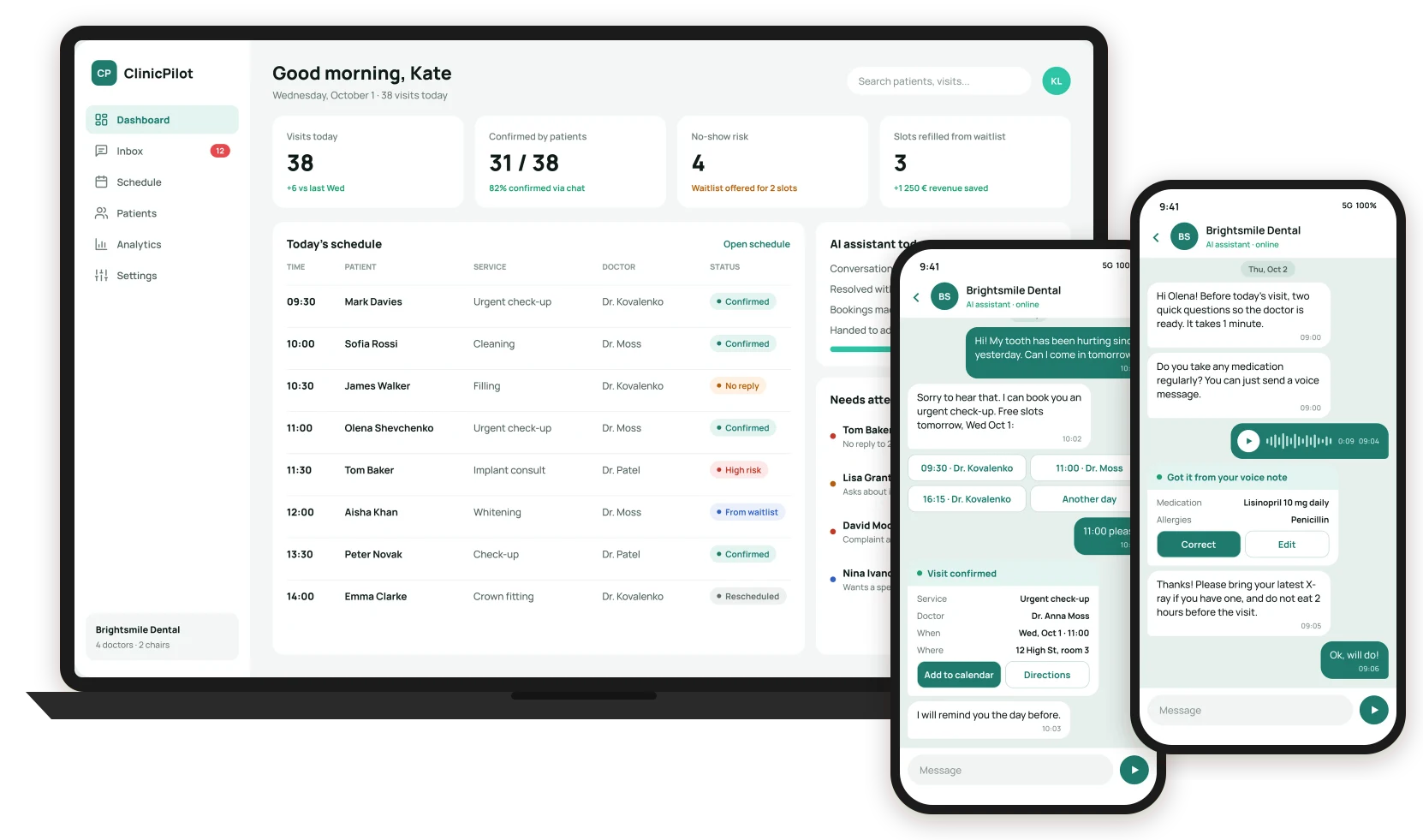
AI administrator for private clinics: booking, reminders, pre-visit questions and follow-ups in Telegram, WhatsApp and on the website, with one admin panel for the team.
View details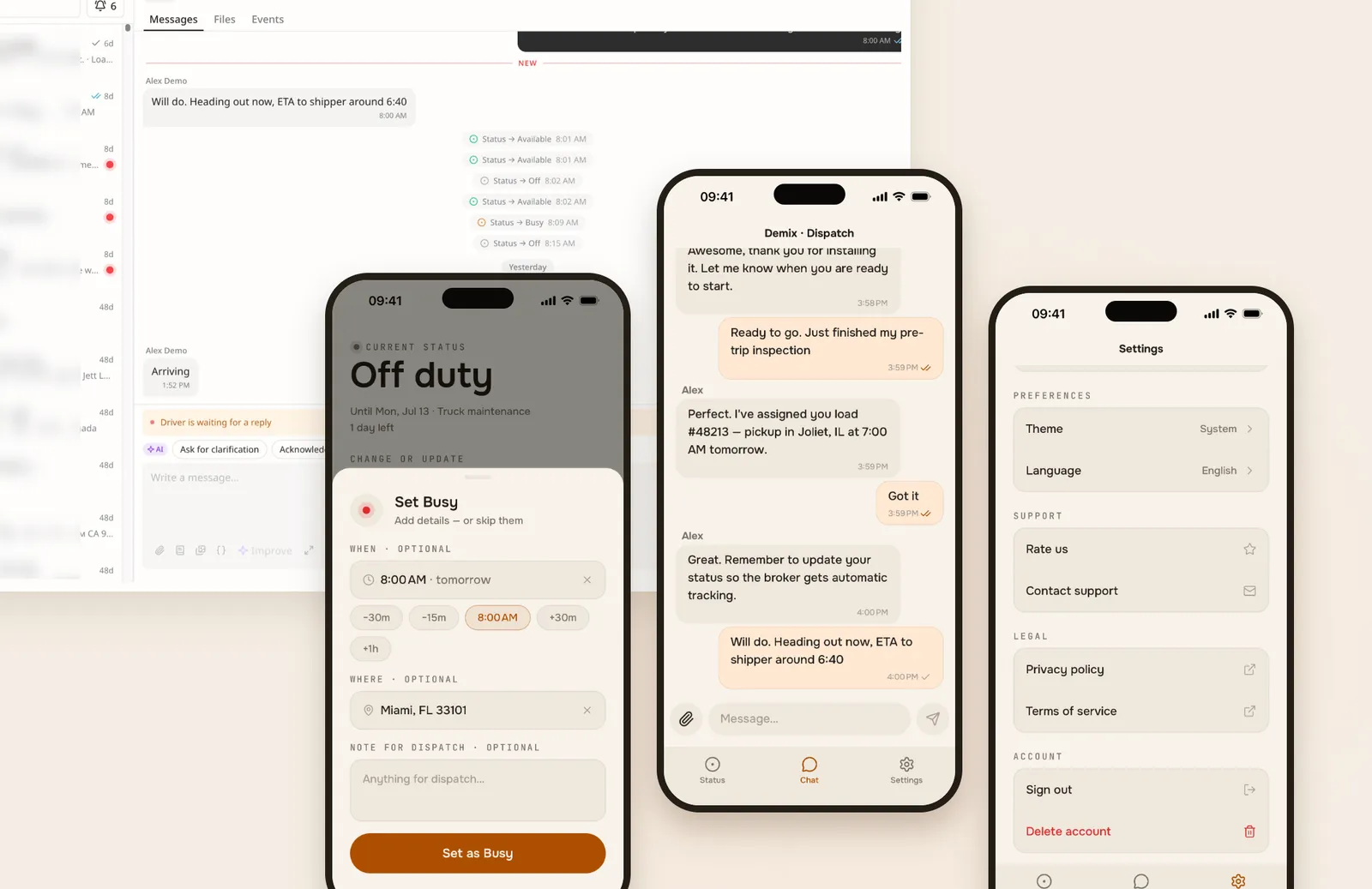
A dispatcher hub and driver mobile app that turn check calls into live data: driver statuses, automatic location sharing, rich chat with document scanning, and two-way TMS sync — multi-carrier by design.
View details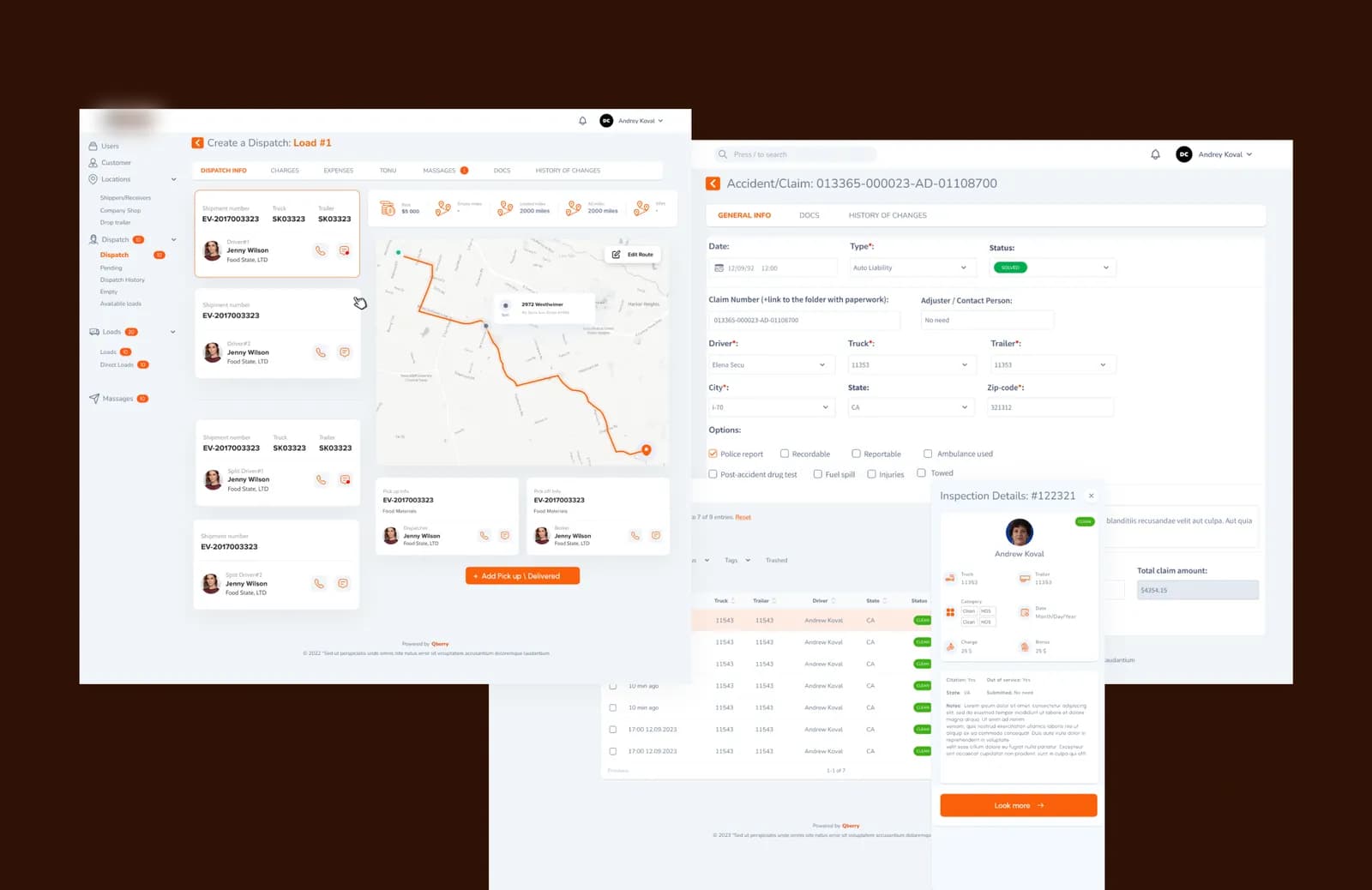
TMS for the logistics company with automated route planning and delivery points management modules. The solution's integration with the existing LMS
View details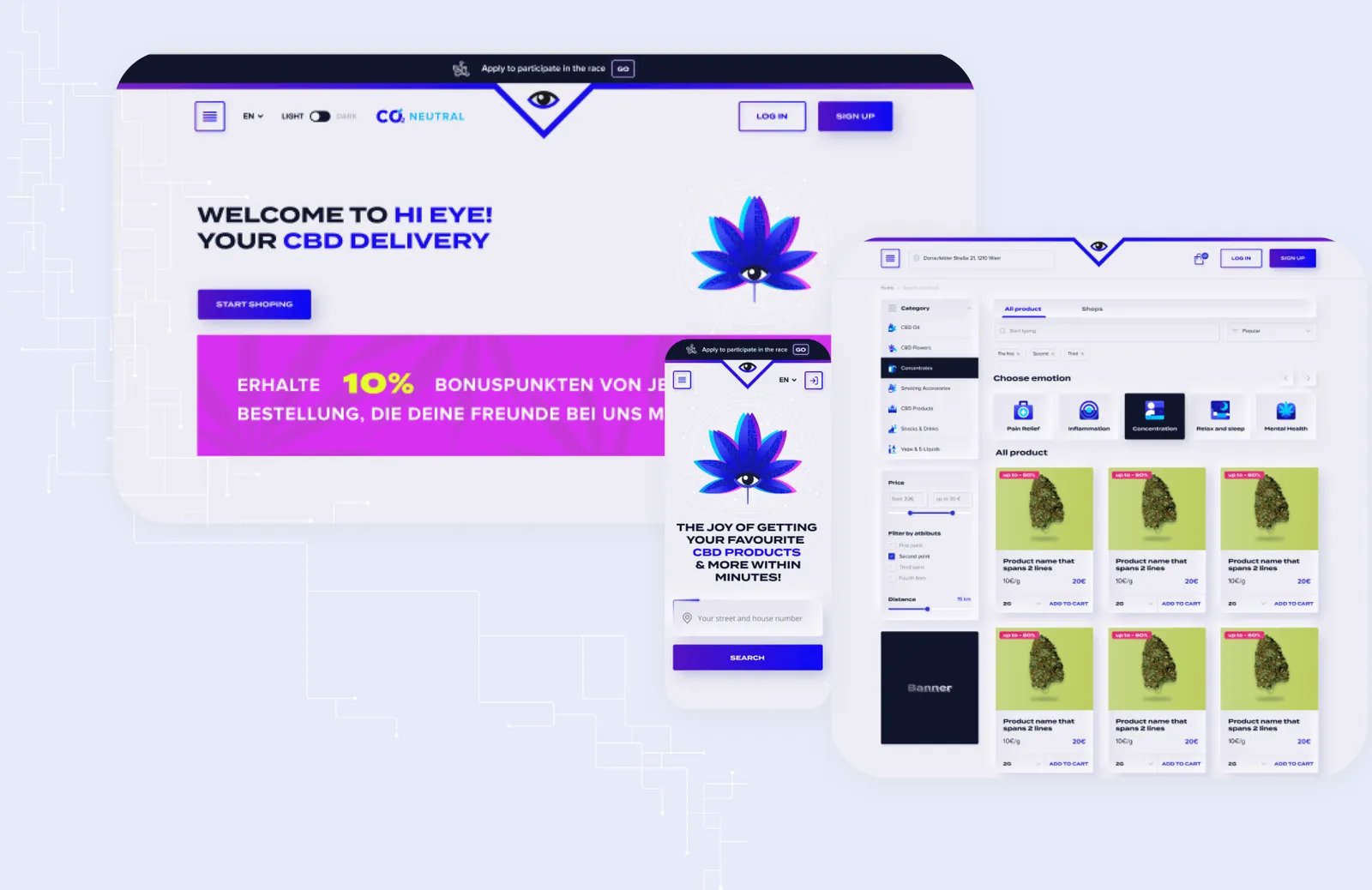
Project Hi Eye was initiated to make it easier for you to shop for CBD products in line with today's technology and trends.
View detailsA minimum viable product is a version with just enough features for early customers to use it and for you to validate the business idea. It lets a startup test demand without paying for the full product, collect real feedback, reach the market quickly and decide the next steps based on actual usage.
A proof of concept answers a technical question: can this be built and will it work, for example an AI model on your data. It is usually internal and not meant for customers. An MVP answers a market question: will people use and pay for it, so it is a small but real product in the hands of users.
Usually two to four months, depending on the complexity and the feature scope. A simple MVP can be ready in six to eight weeks, while a product with several user roles and integrations takes three to four months. We give an accurate timeline after the discovery phase.
It depends on the features, the platforms and the design. A basic MVP for one platform usually starts from $20 000 to $40 000, and a product with web and mobile versions ranges from $50 000 to $100 000 and more. The lean scope keeps the first investment on the essential features.
We watch user behaviour, collect feedback and track your KPIs, then add the features users actually need, fix issues quickly and prepare the product to scale. The MVP is the start of the product, not its final version.
No. We build the MVP on the same stack a full product would use and plan the architecture for growth, so the code is extended as the product gains traction. Only a proof of concept is sometimes disposable, and we say so before it starts.
Let's talk about your project

Illia Kvasnitkiy
CEO at Qberry
"Qberry impresses with technical prowess, timely delivery, and excellent communication. Their dedication to quality enhanced our partnership."