
Business analysis
Your goals, users and business flows mapped together with market and competitor research, so the product is designed around the problem it has to solve.
 ServiceView more: Business analysis
Research, architecture, a prototype, a requirements specification and an estimate, prepared before development starts. You decide on facts, and the build starts from a plan instead of guesses.
Your goals, users and business flows mapped together with market and competitor research, so the product is designed around the problem it has to solve.
ServiceView more: Business analysisFunctional decomposition of the product into features, prioritised with their rationale, and a clear line between the first release and what comes later.
ServiceView more: Feature breakdownTechnology research, limiting factors, the stack and a Software Architecture Document with the key diagrams and the DevOps and operations vision.
Mood boards, wireframes for the core user flows, a visual concept and style guide, and a clickable prototype to test the idea with users and investors.
A software requirements specification with user stories, acceptance criteria, non-functional requirements and activity diagrams, reviewed by QA for gaps and edge cases.
A rough estimate early on, then a detailed one by feature and platform, with milestones, a timeline and the team you need to deliver it.
AI in this service
Today the most important discovery question is which parts of the product a model or an automation should do. We answer it with evidence, not hype.
We go through every process and feature to find what an agent, a model or an n8n workflow can handle, what must stay with people, and what it will cost to run.
AI helps us digest competitor products, market data and interview notes quickly, so analysts spend their time on conclusions rather than on collecting material.
AI drafts user stories and checks the specification for contradictions and missing cases; business analysts and architects write the final version and sign it off.
Why Qberry
Business analysts, solution architects, designers, senior developers and QA look at the product together, so business and technical risks are both covered.
Technical constraints, integration pitfalls and business risks surface on paper, where changing course costs hours, not sprints.
The specification, prototype and estimate are yours to use for fundraising, hiring or development with any team, including ours.
Design and AI tools for the research and the prototype, and the modern stack the architecture is usually built on.
 Claude
 OpenAI
 n8n
n8n Python
 TypeScript
 Next.js
 Node.js
 React
React PostgreSQL
 Figma
Figma Docker
 AWS
AWSWith our technical process
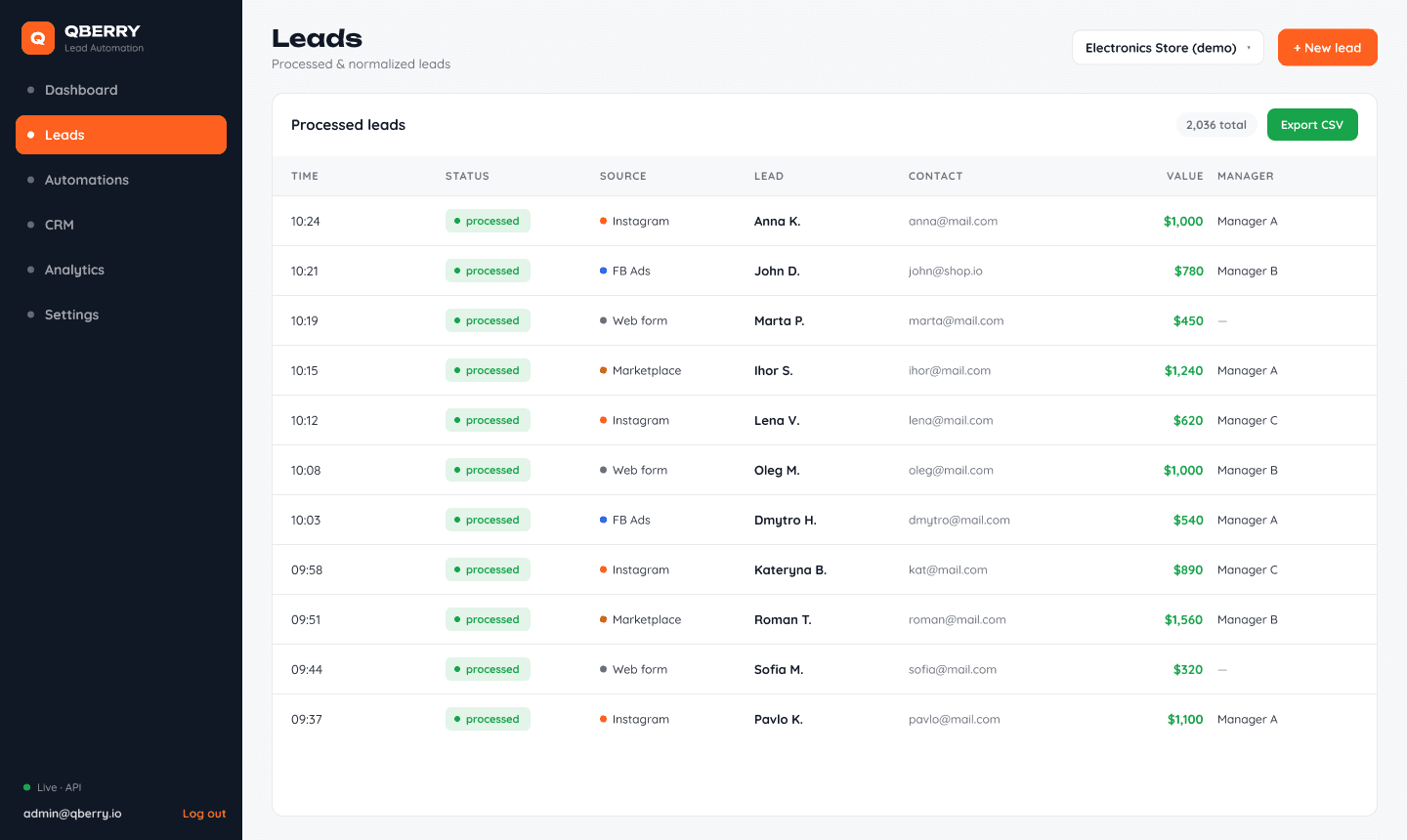
A unified system for processing leads from all channels — validation, CRM deal creation, distribution among managers, and instant client response.
View details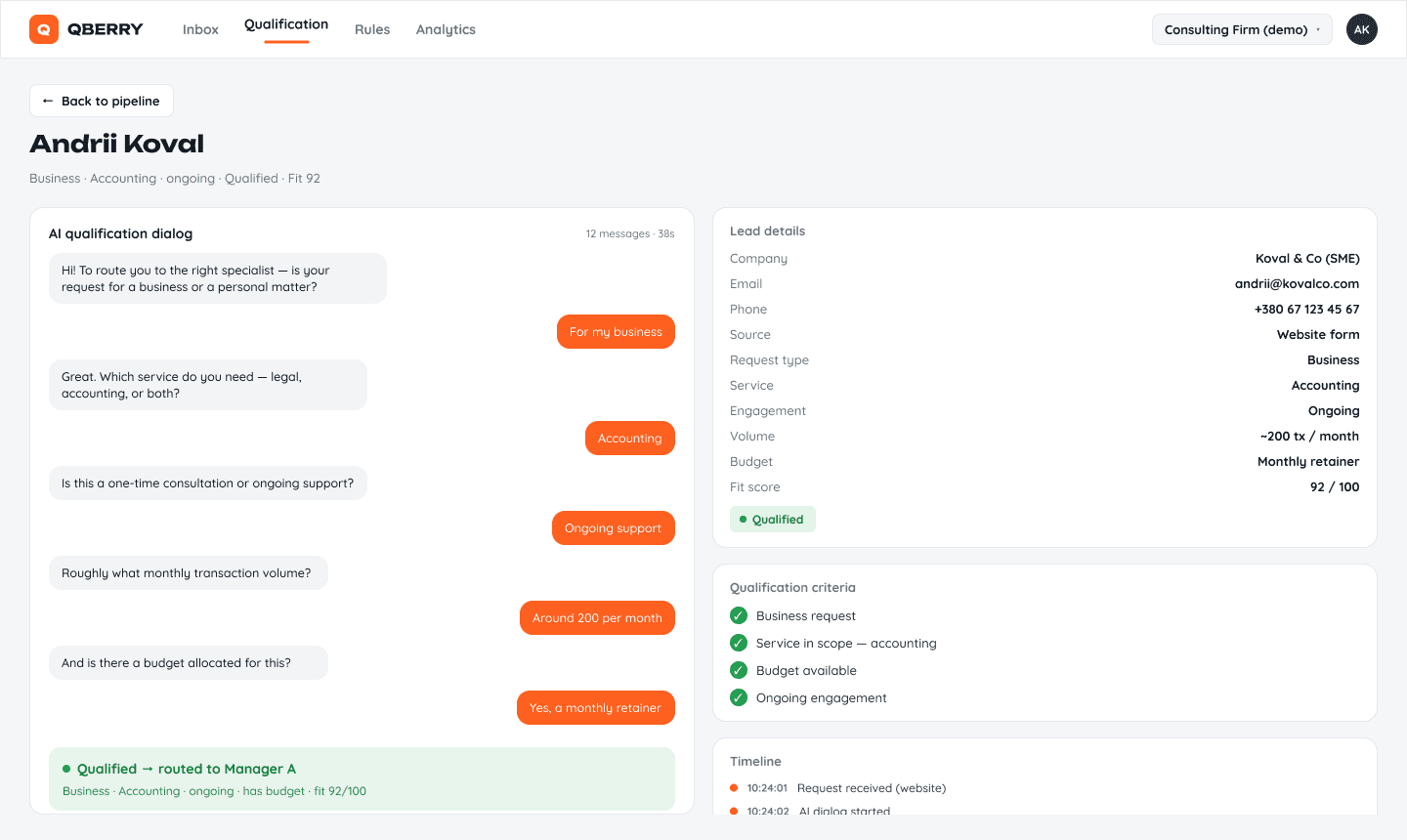
Automated initial client interaction powered by n8n and AI — filtering non-target inquiries and passing only qualified leads to managers.
View details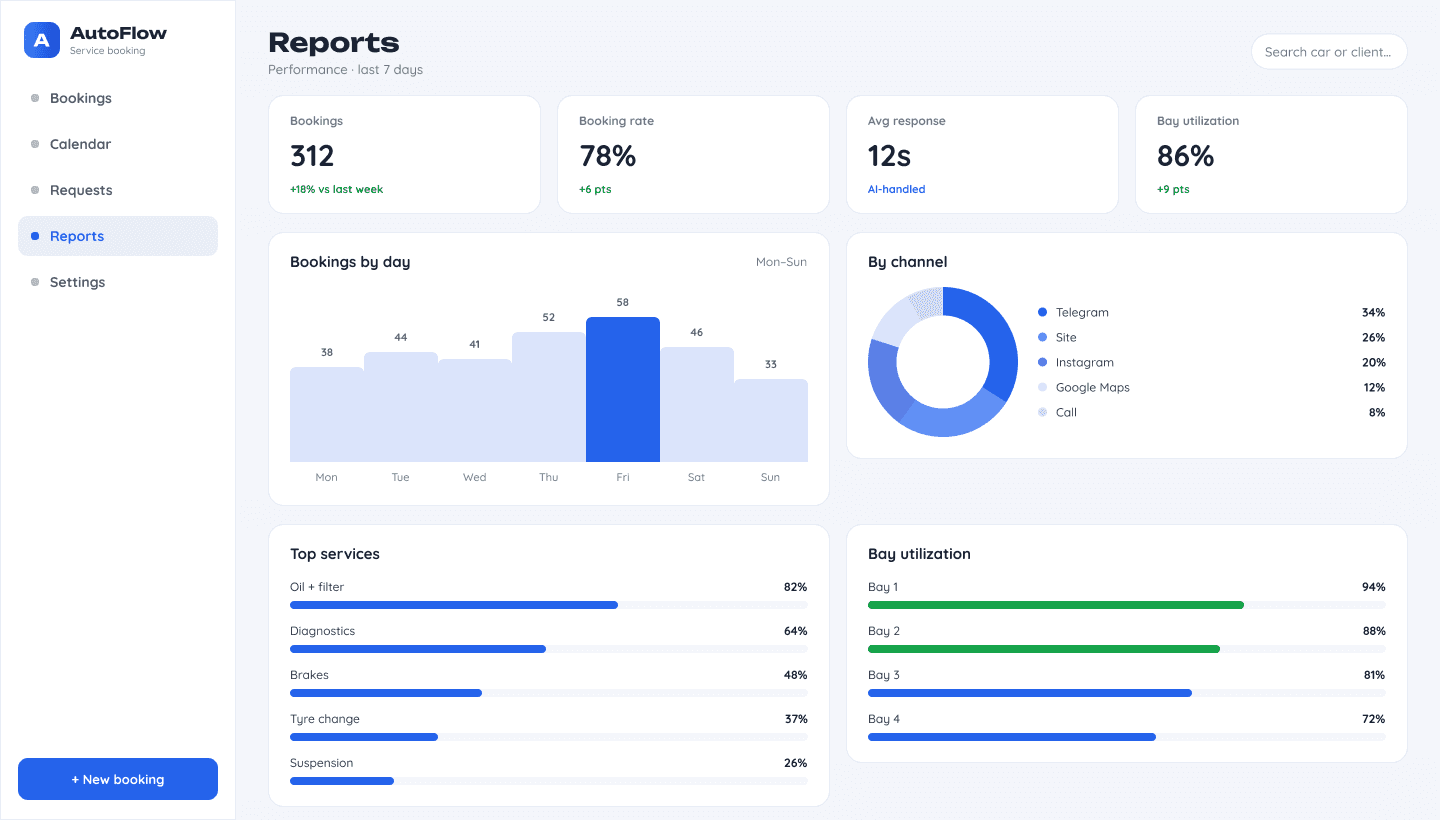
An AI assistant answers on every channel, collects the car, problem and urgency, checks the live schedule and turns each request into a ready-to-confirm booking.
View details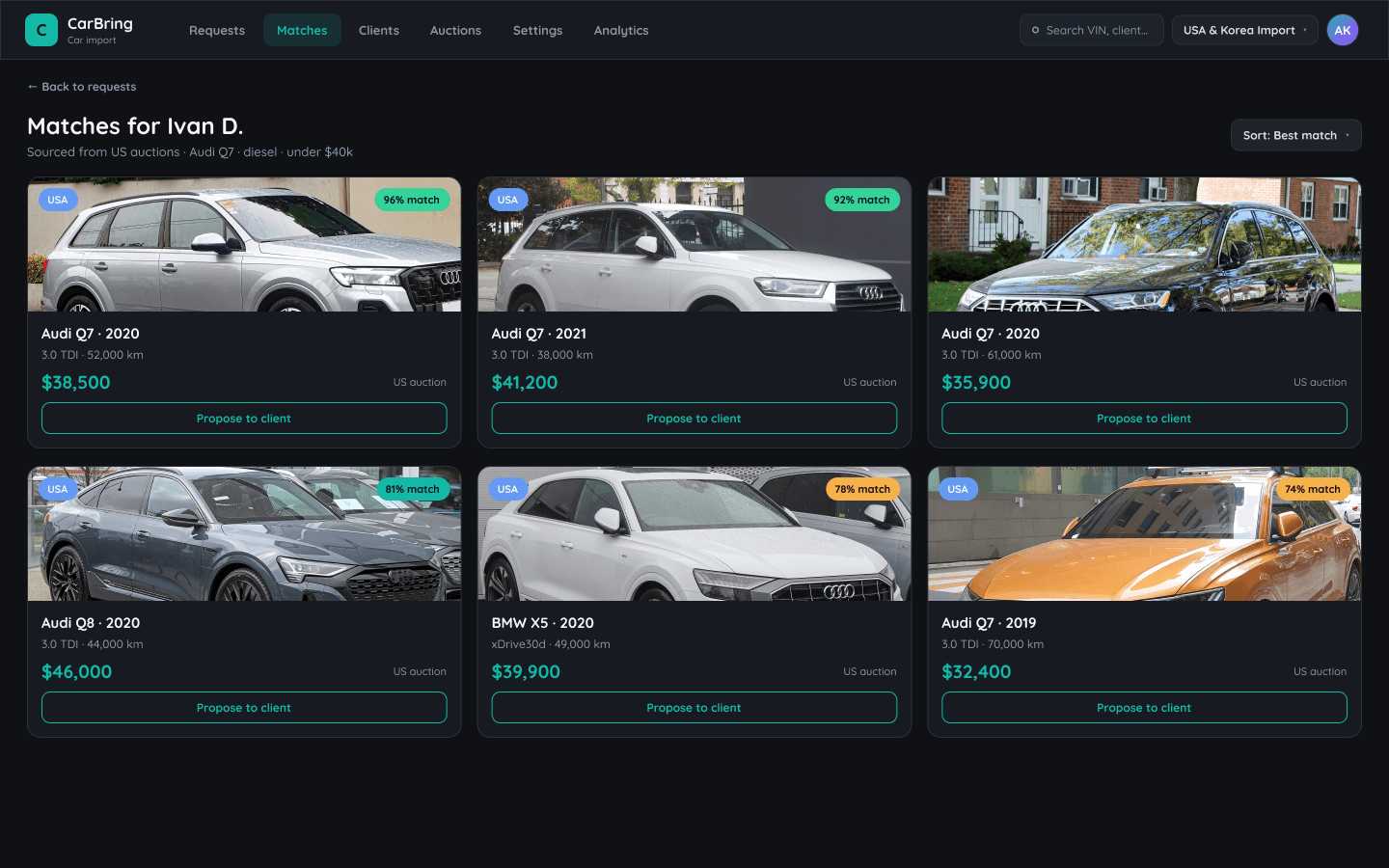
An AI assistant answers car enquiries on every channel, collects budget, make, year, engine and market, matches live US & Korean auction cars and hands the manager a qualified buyer.
View details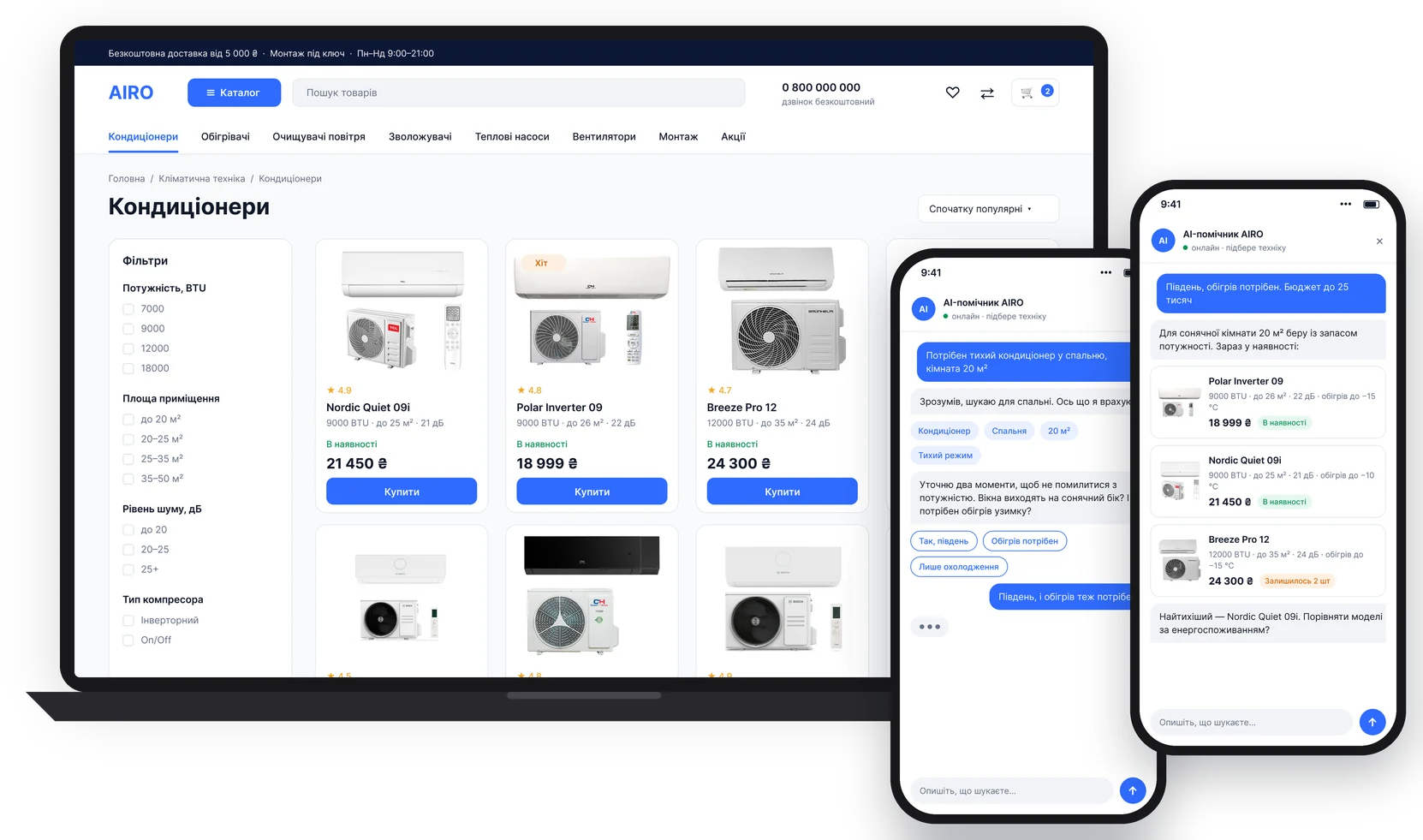
AI assistant for an online store: shoppers describe what they need in their own words, the assistant asks follow-up questions and shows products with live prices and stock from the store's API. Built into the existing store in 2 months.
View details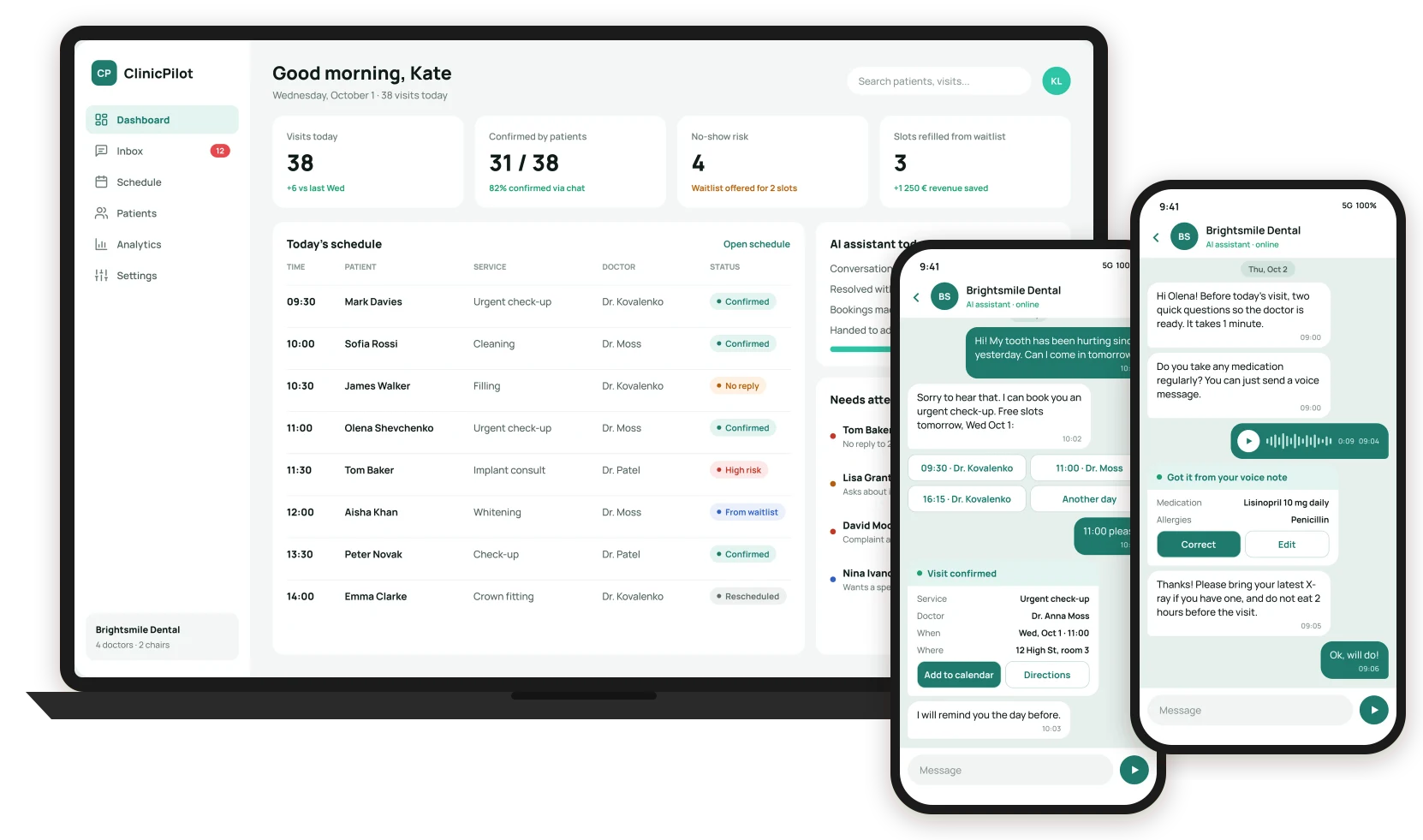
AI administrator for private clinics: booking, reminders, pre-visit questions and follow-ups in Telegram, WhatsApp and on the website, with one admin panel for the team.
View details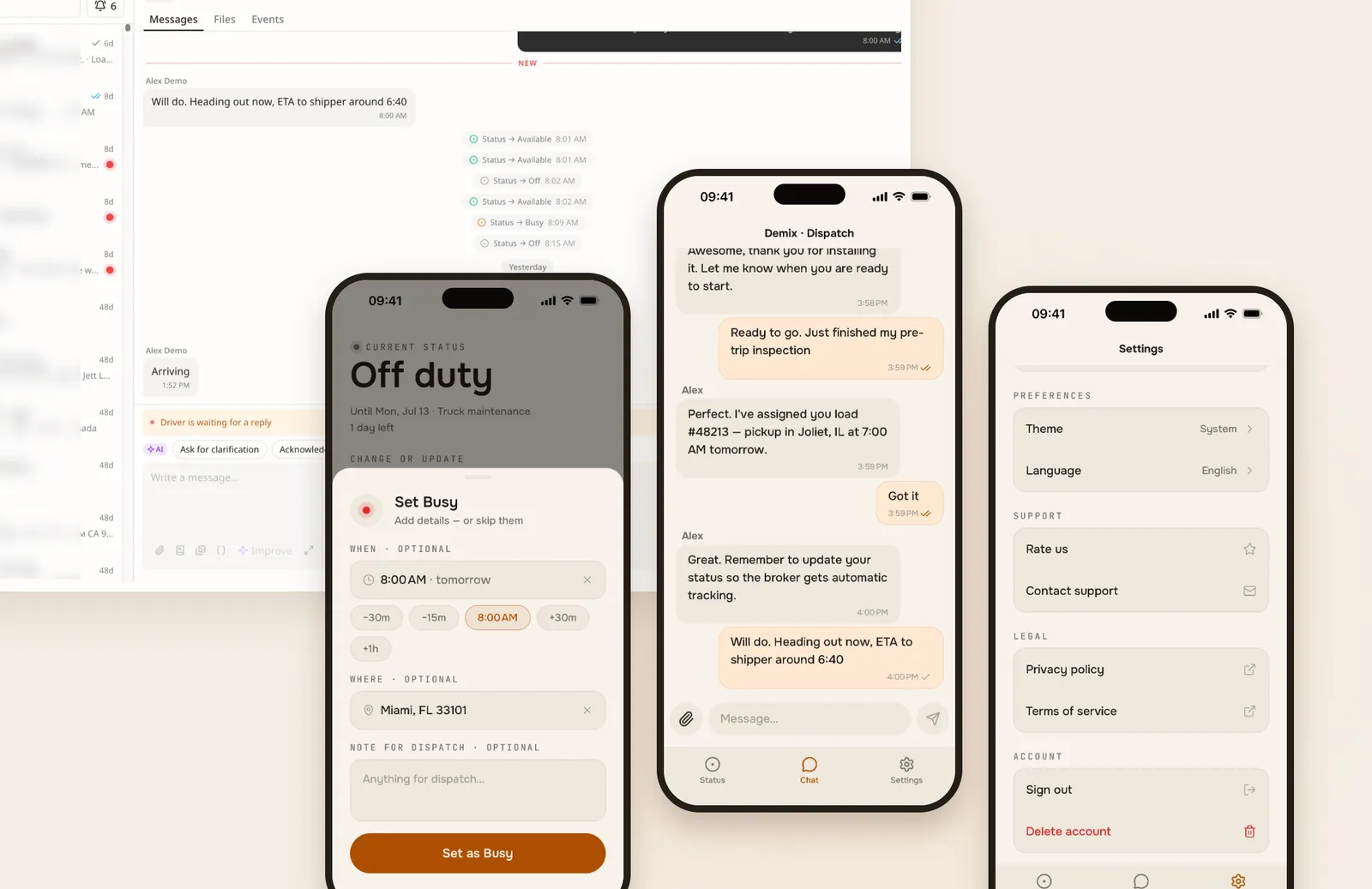
A dispatcher hub and driver mobile app that turn check calls into live data: driver statuses, automatic location sharing, rich chat with document scanning, and two-way TMS sync — multi-carrier by design.
View details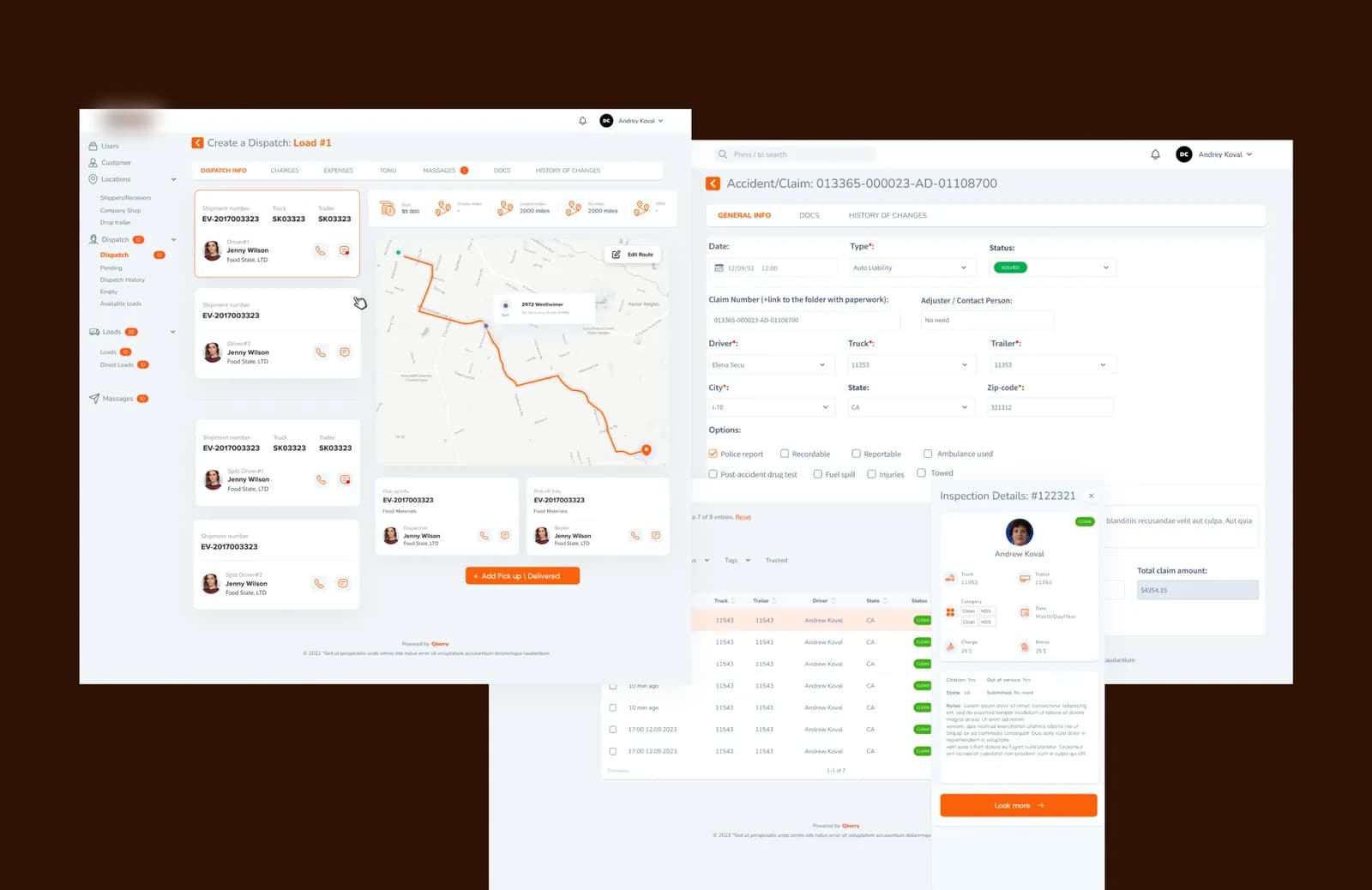
TMS for the logistics company with automated route planning and delivery points management modules. The solution's integration with the existing LMS
View detailsThe first stage of a project, where the product idea is researched, planned and validated before full development. It covers market research, requirements, architecture, UX design and cost estimation, and ends with a complete blueprint of the project.
A business analysis with the prioritised feature list, a software architecture document with the recommended stack, wireframes and a clickable prototype, a requirements specification with user stories and acceptance criteria, and a detailed estimate with a timeline and milestones.
Usually two to six weeks, depending on the complexity and scope. A simple mobile app needs two to three weeks, a complex enterprise system four to six. We confirm the timeline once we understand the project.
It depends on the complexity and the deliverables. Discovery for a small project usually starts from $5 000 to $10 000, and for an enterprise application ranges from $15 000 to $30 000 and more. The discovery phase itself is offered at a fixed price.
If the scope is already clear and documented, a short scoping call may be enough. If the idea is new, the product depends on AI or integrations, or you need an estimate to raise money, a short discovery saves far more than it costs.
You receive all the documentation, the prototype and the estimate needed to decide on development. You can use them to secure funding, hire a team, or continue with us straight into development with a clear roadmap and budget.
Let's talk about your project
$ qberry --how-we-work
→ scope_and_estimate/
# clear scope and estimate before we start
→ weekly_demo/
# you see working progress every week
→ one_pm_on_your_side/
# one contact who owns your project
$ launch && support ▶

no black box —you see every step