
Research and analysis
Goals, users, competitors and the existing product, turned into a clear brief: who the interface is for, what they need to do and where the current one fails.
Research, wireframes, clickable prototypes and screen-by-screen design in Figma for web and mobile products. AI helps us research faster and try more variants; the decisions stay with the designer and with you.
Goals, users, competitors and the existing product, turned into a clear brief: who the interface is for, what they need to do and where the current one fails.
Layouts that show where every element sits and how the flow works, then a clickable prototype you test with real users before a line of code is written.
Two or three visual concepts to choose from, then screen-by-screen design with a component library, so the product stays consistent as it grows.
A focused first version for startups that need to launch, and the roadmap of screens that follows once the product finds its users.
Usability testing and analytics of the current interface, then an update that keeps what works and fixes what loses users, without a stop in the business.
 ServiceView more: Redesign
Design tokens, components and specifications ready for the engineers, and the designer stays on the project through implementation.
AI in this service
AI does not draw the product for us. It removes the waiting between a question and the material to answer it.
Interviews, reviews and competitor screens summarised in hours, so the brief rests on evidence rather than on a first impression.
Copy, layouts and illustration directions generated for review, so you compare three real options instead of one draft.
Interfaces for assistants, agents and generated content: confirmations, states, trust and control patterns that make an AI feature usable, not just impressive.
Why Qberry
Designers and developers are one team, so the interface is built as it was designed and the hand-over takes days, not rounds of fixes.
Clickable prototypes and usability sessions catch the problems while they are cheap to fix.
A component library and design tokens from the first screens, so new features look like part of the product a year later.
Figma at the centre, AI for research and variants, and the stack the design is handed to.
 Claude
 OpenAI
 Next.js
 Figma
Figma React
React Flutter
 Tailwind CSS
 Adobe Creative Suite
With our technical process
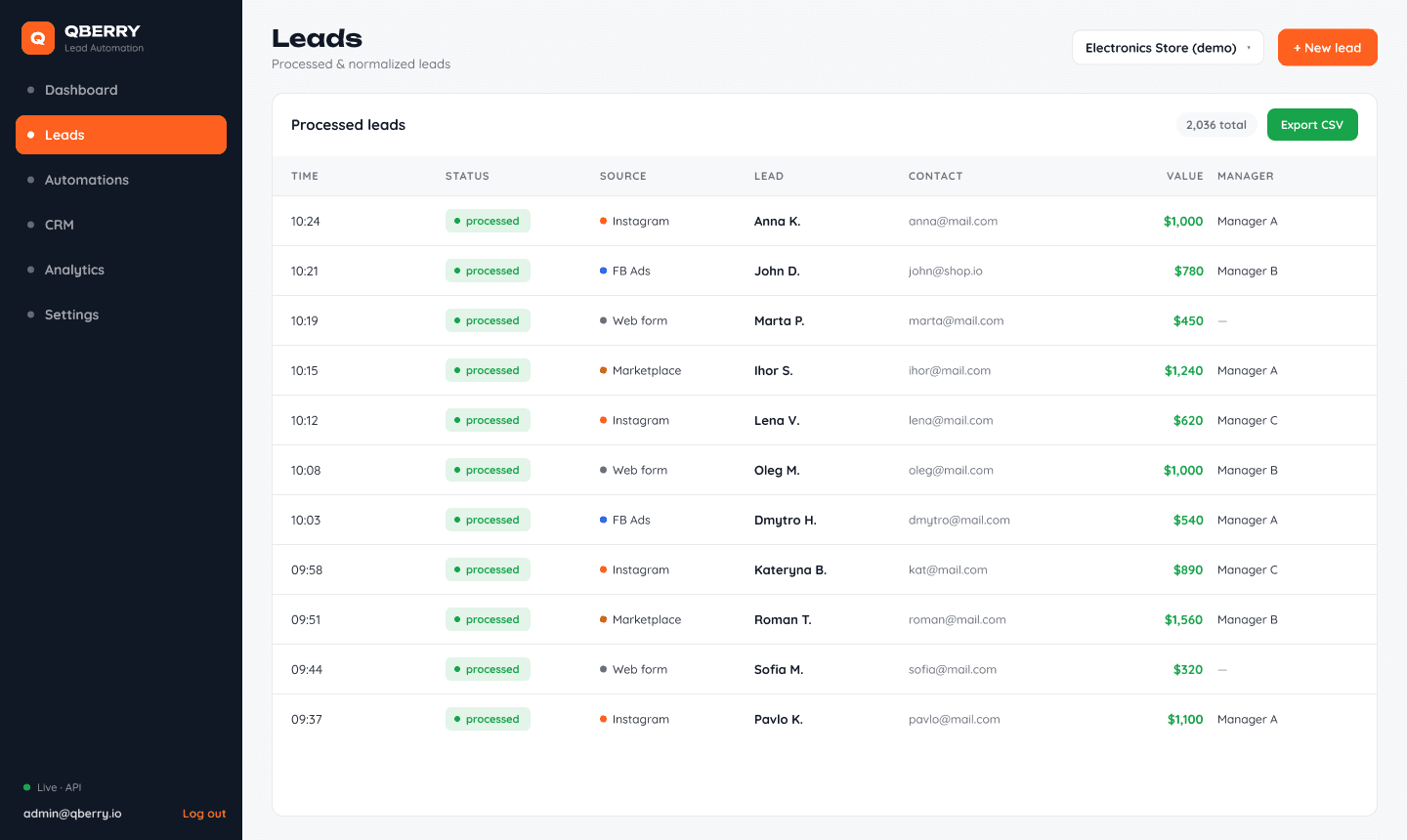
A unified system for processing leads from all channels — validation, CRM deal creation, distribution among managers, and instant client response.
View details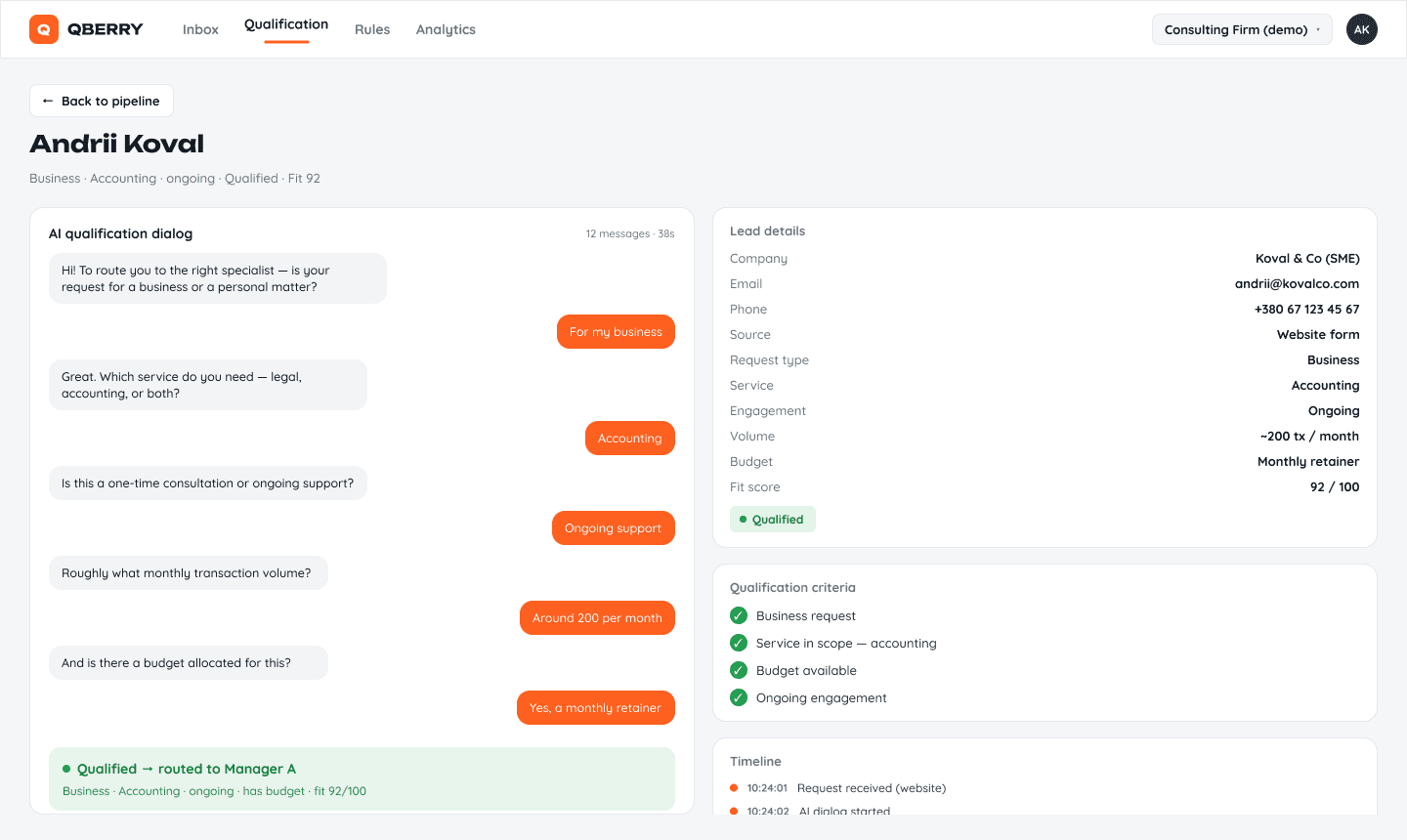
Automated initial client interaction powered by n8n and AI — filtering non-target inquiries and passing only qualified leads to managers.
View details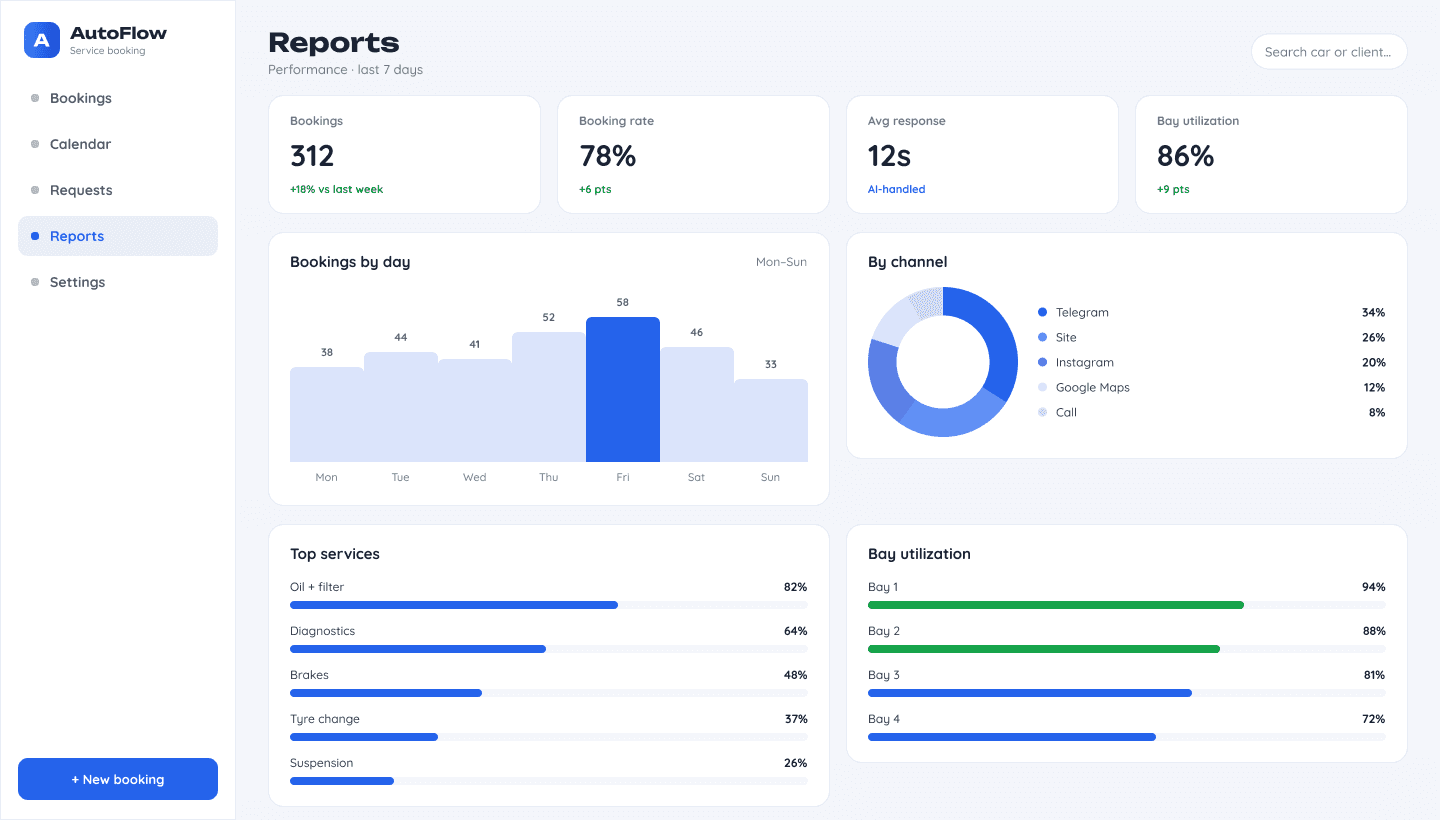
An AI assistant answers on every channel, collects the car, problem and urgency, checks the live schedule and turns each request into a ready-to-confirm booking.
View details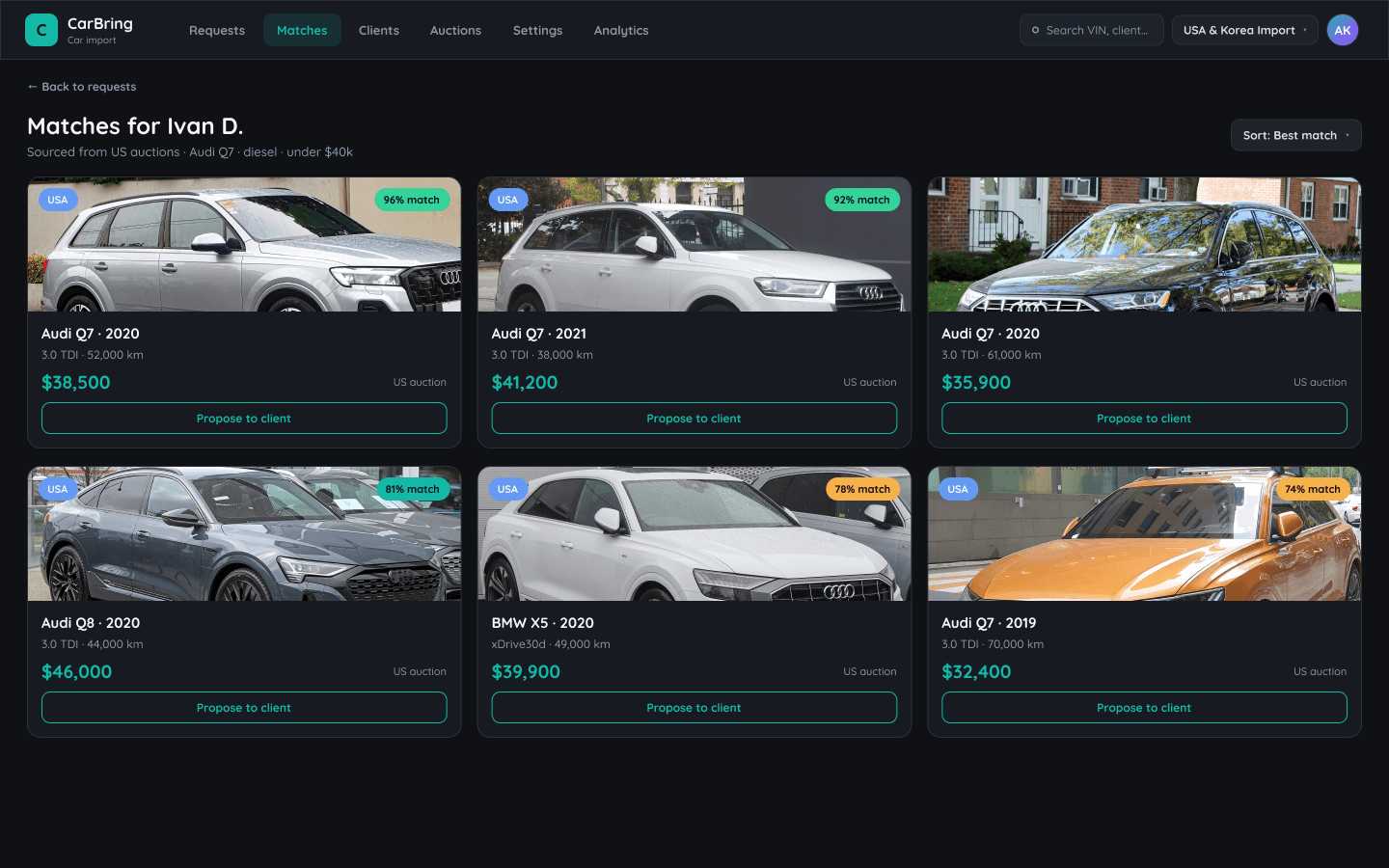
An AI assistant answers car enquiries on every channel, collects budget, make, year, engine and market, matches live US & Korean auction cars and hands the manager a qualified buyer.
View details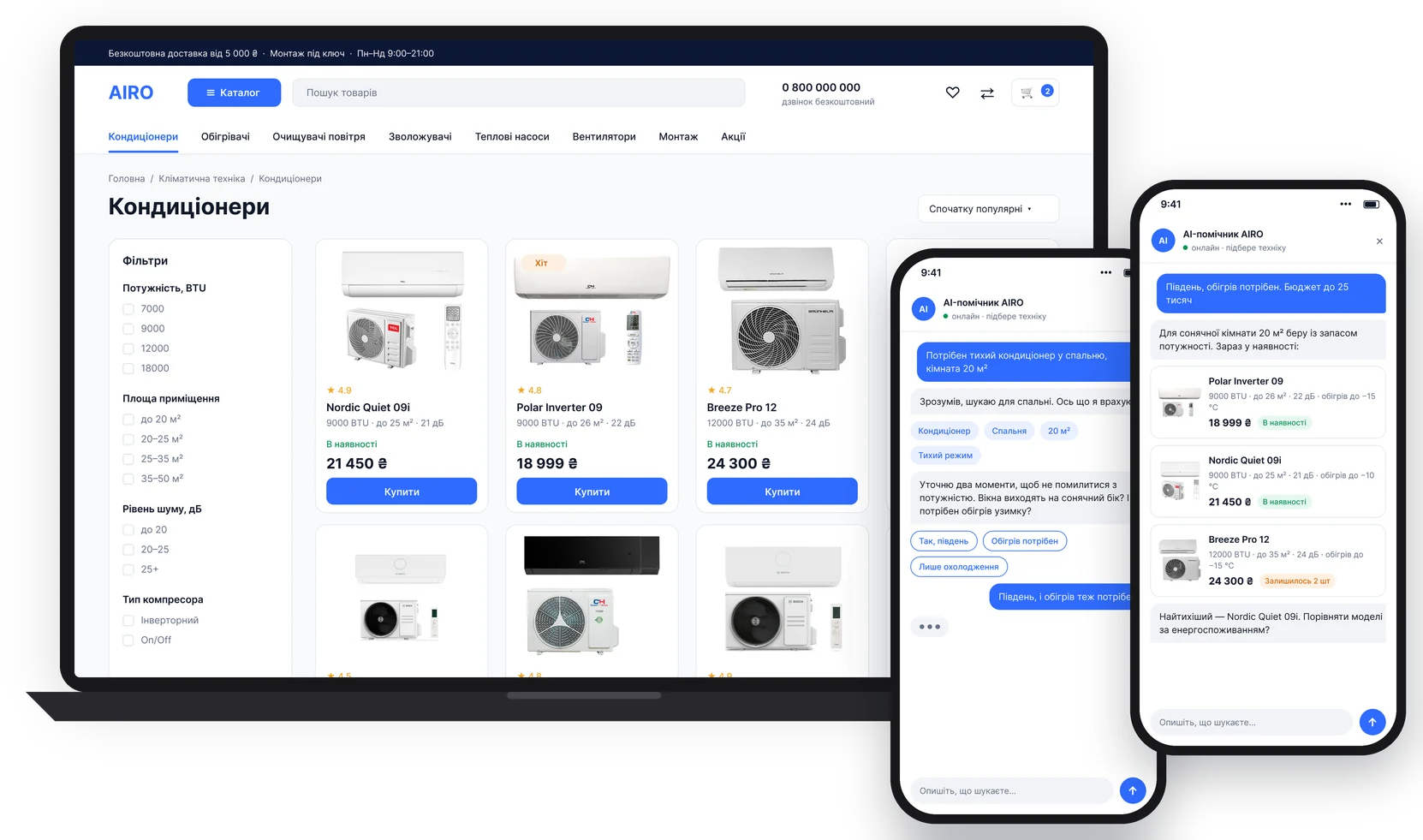
AI assistant for an online store: shoppers describe what they need in their own words, the assistant asks follow-up questions and shows products with live prices and stock from the store's API. Built into the existing store in 2 months.
View details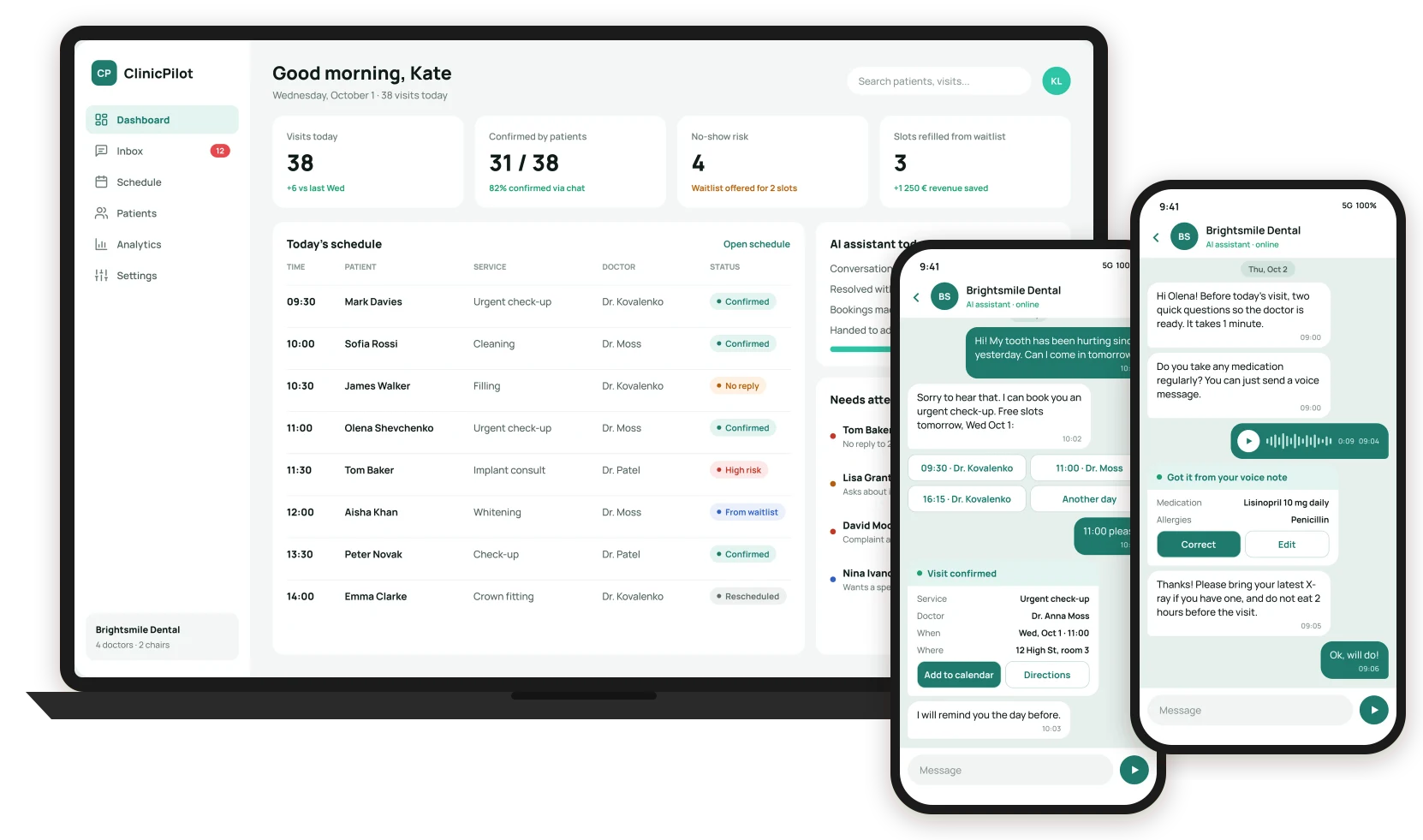
AI administrator for private clinics: booking, reminders, pre-visit questions and follow-ups in Telegram, WhatsApp and on the website, with one admin panel for the team.
View details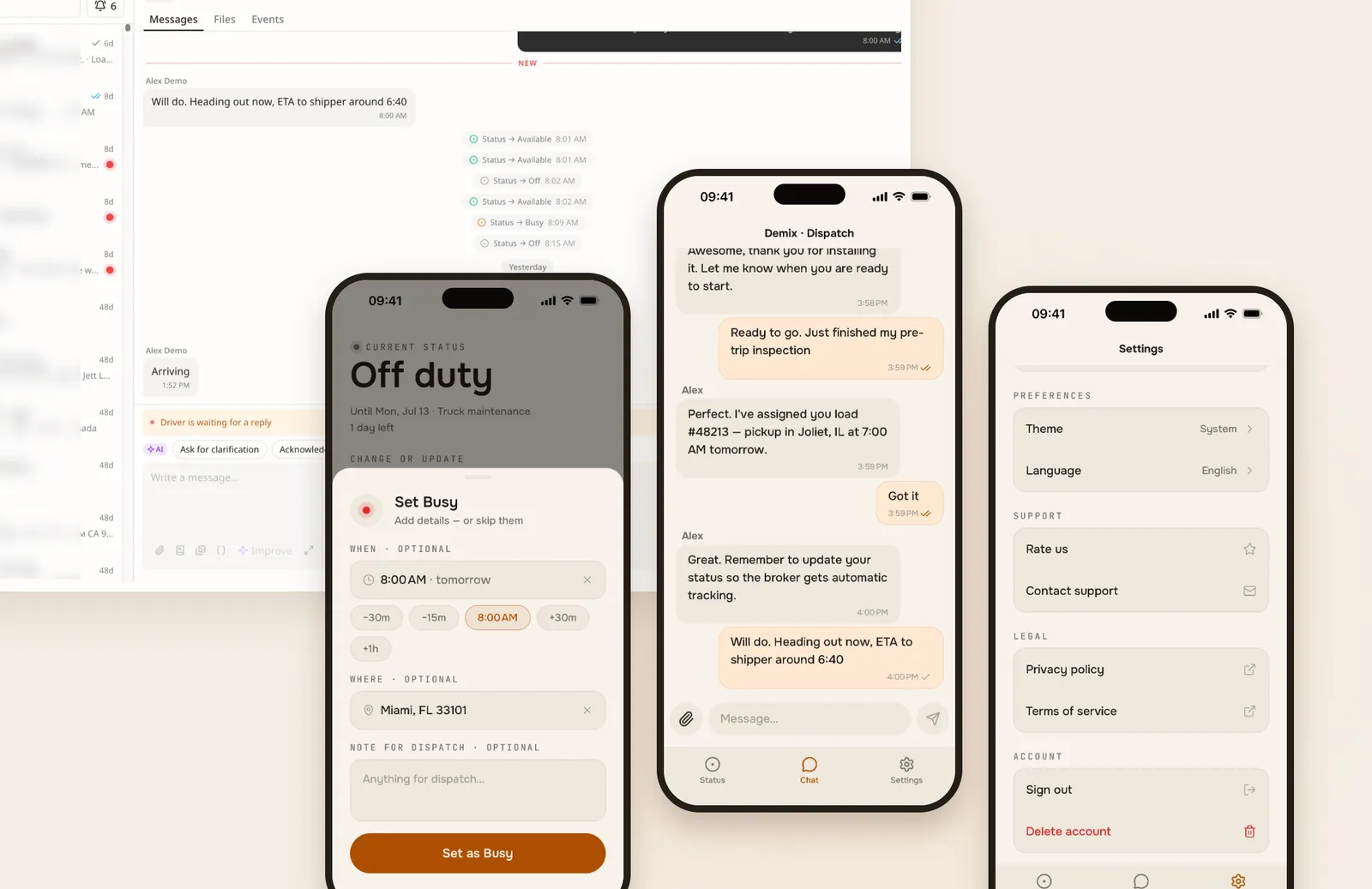
A dispatcher hub and driver mobile app that turn check calls into live data: driver statuses, automatic location sharing, rich chat with document scanning, and two-way TMS sync — multi-carrier by design.
View details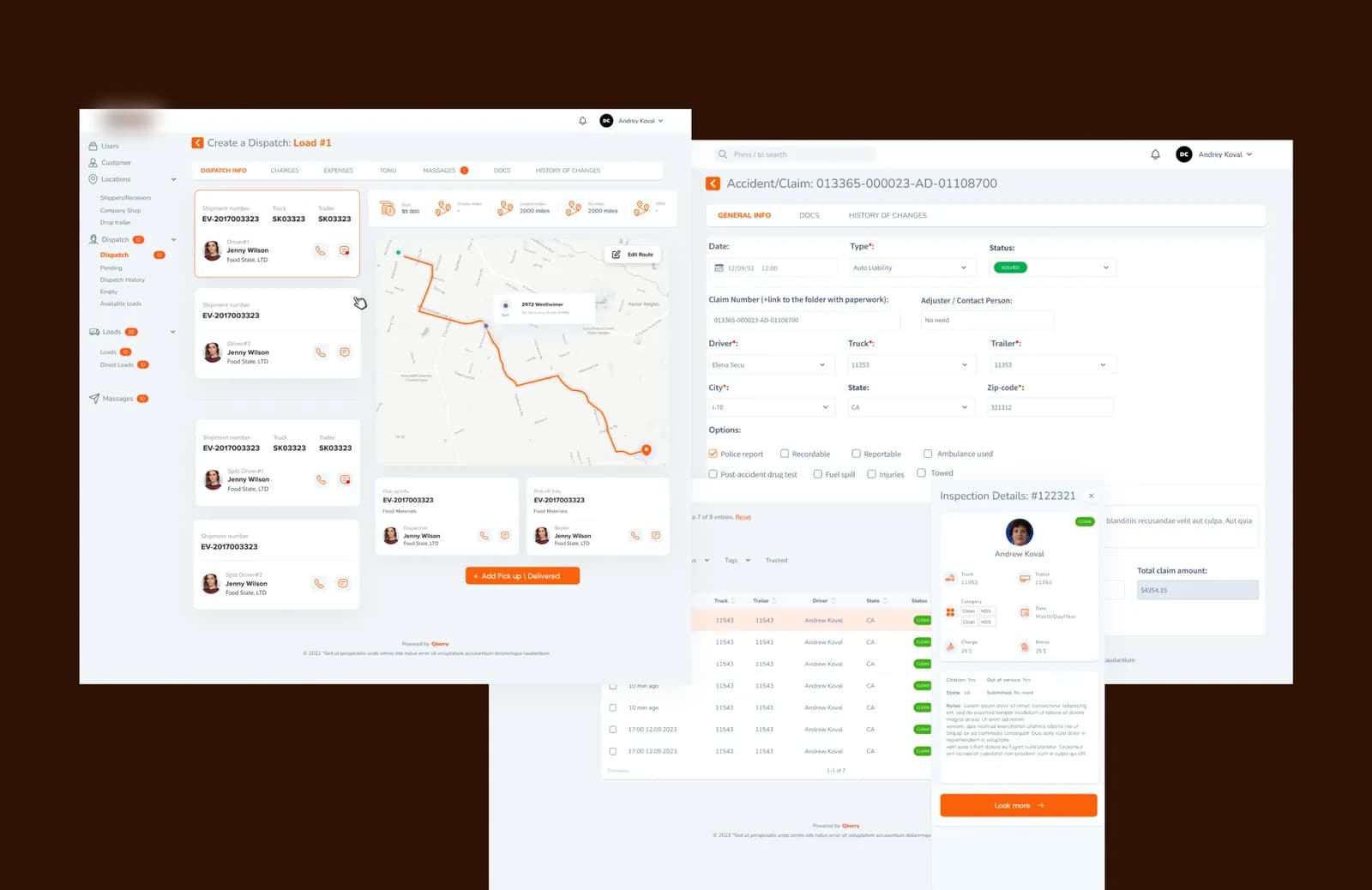
TMS for the logistics company with automated route planning and delivery points management modules. The solution's integration with the existing LMS
View detailsResearch and brief, wireframes, a clickable prototype, two or three visual concepts, then screen-by-screen design in Figma with a component library and a hand-over to development.
Yes. Web products, mobile apps and admin dashboards, in Figma, with the platform conventions of iOS and Android respected.
Yes. We start with usability testing and analytics of the current interface, keep what works, fix what loses users and roll the update out without stopping the business.
It speeds up research and produces variants of copy, layouts and illustrations for review. The designer decides, and you approve; nothing generated goes into the product unreviewed.
It depends on the number of screens and flows, on whether a component library exists and on the research needed. We give a fixed quote after a short call about the product.
Yes. The same team builds web products on Next.js and React and mobile apps on Flutter and React Native, so the design goes into development without a hand-over gap.
Let's talk about your project
$ qberry --how-we-work
→ scope_and_estimate/
# clear scope and estimate before we start
→ weekly_demo/
# you see working progress every week
→ one_pm_on_your_side/
# one contact who owns your project
$ launch && support ▶

no black box —you see every step